If you’ve ever pushed an outdoor baby stroller over uneven gravel, a sloping sidewalk, or a bumpy dirt path, you know how critical the brakes are—especially when you need to keep your little one safe without fumbling with a wobbly handle or jostling a napping baby. As a supplier of outdoor baby strollers, I get asked this question constantly: how do those brakes actually work, and why do some feel far more reliable than others when you’re navigating rough outdoor terrain? Let’s break this down, not with jargon-heavy engineering, but with real-world context anyone who’s ever used a stroller can relate to. Outdoor Baby Strollers
First, let’s start with the core purpose of outdoor stroller brakes—they’re not just a backup for parking. Unlike indoor strollers that rarely encounter anything steeper than a flat store floor, outdoor strollers face slopes, loose terrain, and unexpected stops: your toddler might dash toward a busy crosswalk, or a gust of wind could catch the stroller and send it rolling backward down a driveway if you let go for even a second. That’s why outdoor stroller brakes are built tougher than their indoor counterparts; most are friction-based systems, but the design of that system changes based on where you’re using it.
Let’s talk about the most common brake style on high-quality outdoor strollers: foot-activated rear wheel brakes. This is the one you’ll find on nearly all our top-selling models, and for good reason. It’s simple, fast to engage, and doesn’t require you to take your hands off the handle (a huge win when you’re holding a coffee, a diaper bag, or a squirming toddler’s hand). Here’s how it works in plain terms: each stroller’s rear wheels have a small, rigid metal pad attached to a lever that sits right beneath the handle’s base, within easy reach of your foot. When you tap the brake pedal forward, that pad presses firmly against the inner rim of the rear wheel’s hub—no rubber tire contact here, which is key for outdoor use. Why the hub instead of the tire? A tire’s tread can pick up mud, gravel, or sand, which would create tiny gaps between the brake pad and the tire, making the brake slip. The hub is a smooth, metal surface, so even if it’s covered in light dirt, the pad still makes consistent, solid contact. That same design also prevents the brake from wearing out quickly; the metal pads are made of a durable composite designed to withstand thousands of stops, even on rocky paths or wet grass.
Wait, you might be wondering—why not a hand brake, like a bike brake? Hand brakes are common on kids’ bikes and some specialty strollers, but they’re less practical for outdoor use for a few reasons. First, when you’re pushing a stroller uphill over a mile-long trail, your hands are already working to keep the handle steady; adding a brake you have to squeeze constantly can lead to hand fatigue. Second, in an emergency—like a toddler stepping off the curb—you need to react fast. A foot tap is way quicker than reaching for a hand brake, especially if you’re wearing gloves or have something in one hand. That’s not to say hand brakes are useless, though; some all-terrain strollers add a secondary hand brake for steep slopes, just in case the foot brake isn’t enough, but the primary system is almost always foot-activated for outdoor use.
Now, let’s get into the part that actually keeps the stroller from rolling: mechanical advantage. When you press that foot pedal, you’re not just pushing a pad against a wheel—you’re activating a lever system that multiplies the force of your foot tap. Think of a seesaw: when you push down on one end, the other end lifts with more force than you applied. That’s exactly what’s happening with the stroller’s brake lever. The pedal is connected to a thin metal rod that runs along the stroller’s frame, up to the brake pad. When you press the pedal, the rod pulls or pushes (depending on design) the brake arm, which in turn forces the pad against the wheel hub. This means you don’t have to use a lot of strength to engage the brake—even if you’re wearing lightweight sneakers instead of work boots, a quick tap is enough to lock the wheels in place. That’s a huge design choice for caregivers who might have limited upper or lower body strength, or who are pushing the stroller with a full load.
But outdoor strollers have to handle more than just flat slopes and dry ground. What happens when you’re crossing a wet, muddy field, or rolling through a puddle? The brake design has to resist water and debris, right? That’s why most outdoor stroller brakes are enclosed, to a degree. The brake pad and lever system isn’t fully sealed, but it’s mounted in a way that keeps most mud, grass, and small rocks out of the moving parts. The metal rod that connects the foot pedal to the brake arm, for example, is often coated in a corrosion-resistant finish to prevent rust, which would make the lever stiff and hard to engage over time. We’ve tested this extensively with our own strollers: we leave them out in the rain, roll them through muddy farm fields, and even run them over small pebbles, and the brakes still engage smoothly. If the brake was just a flimsy, open system, mud would get trapped between the pad and the wheel, or the lever would seize up after a few uses—something we refuse to sell to our customers.
Another critical feature is the “park lock” function. A lot of budget strollers have brakes that only stop the wheel from rolling forward, which is fine for parking on flat ground. But outdoor spaces almost never have perfectly flat parking spots: a sidewalk slopes slightly, a driveway can be uneven, or a grassy park spot might have a gentle incline backward. A good outdoor stroller brake will engage the wheel in both directions—forward and backward—so if you leave the stroller on a slope, it won’t roll away. That’s a safety thing, not just a convenience. I’ve heard too many stories from customers who’ve turned their back for 10 seconds to grab a sippy cup, only to have the stroller roll down a small hill, and a locked brake that works in both directions prevents that. Our strollers have a specific “engage all the way” position for the brake pedal, so you don’t have to guess if it’s locked or not—you can feel a slight click when it’s fully engaged, and a quick tap releases it.
Let’s talk about what makes a brake bad for outdoor use, because it’s a common mistake with cheap strollers. Indoor strollers often use a simple rubber pad that presses against the tire’s outer surface. That works for flat, clean floors, but take it outside, and that rubber pad will slip on loose gravel, wet concrete, or even tall grass. The tire itself is flexible, so when you press a rubber pad against it, the tire can deform slightly, creating a gap between the pad and the hub, which reduces friction. Also, rubber pads wear out much faster than metal composite pads—after a few months of outdoor use, the rubber can get worn down to the point where it barely touches the tire at all. That’s why as a supplier, we prioritize brake systems that target the wheel hub, not the tire, for our outdoor lines.
Wait, what about off-road strollers that are designed for hiking, not just neighborhood walks? Those have even more robust brake systems, often with a secondary drum brake or a disc brake for extra stopping power. A disc brake, similar to what you’d find on a mountain bike, is a small metal disc attached to the wheel hub, with calipers that clamp down on the disc to stop the wheel. These are even more reliable on loose terrain because they’re enclosed, so they’re protected from mud and debris, and they provide more consistent stopping force than a pad-and-hub system. That’s why our hiking-specific outdoor strollers use disc brakes; we’ve had customers tell us they’ve used these strollers to push their kids 5 miles on mountain trails, and the brakes never slipped, even when going downhill for long stretches.
Now, let’s address a question I get all the time: do brakes wear out, and how do you maintain them? Just like any part of a stroller, brakes need a little care to stay working well. For the foot-activated brake systems, every few months, you can wipe down the brake pad and wheel hub with a damp cloth to remove dirt and debris. If the lever feels stiff, you can apply a small amount of silicone lubricant (never WD-40, which can damage metal parts over time) to the metal rod that connects the pedal to the brake arm. For disc brakes, you should check the calipers regularly to make sure they’re not clogged with mud, and replace the brake pads when they wear down (most outdoor stroller brake pads last 1-2 years with regular use, depending on how often you use the stroller on rough terrain). It’s simple, basic maintenance, but it makes a huge difference in how long the brake system lasts.
From my perspective as a supplier, the brakes on an outdoor baby stroller aren’t an afterthought—they’re the most important safety feature. I’ve seen customers walk away from a good stroller because the brakes felt flimsy, and I’ve seen that flimsy brake cause a stroller to roll when it shouldn’t. That’s why we spend extra time testing every brake system on our strollers, taking them through the same conditions our customers face: sloped driveways, muddy parks, gravel paths, even sand at the beach. We don’t cut corners on brake parts because we know that when you’re out with your kid, the last thing you want to worry about is the stroller rolling away.
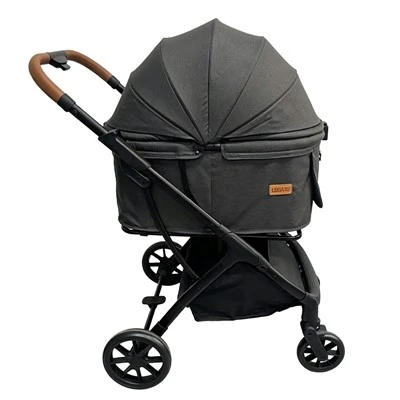
If you’re a retailer, a childcare center operator, or someone looking to stock high-quality outdoor baby strollers, we’re here to help. Our outdoor stroller lines are designed with safety, durability, and ease of use at their core, including robust brake systems that work reliably in all outdoor conditions. To learn more about our product range, discuss bulk ordering options, or get technical specs for your store, don’t hesitate to reach out. We’re always happy to answer questions and help you find the right stroller solutions for your needs.
Baby and Toddler Products References
- Consumer Product Safety Commission. (2022). Stroller Safety Guidelines for Outdoor and All-Terrain Models. U.S. Consumer Product Safety Commission.
- American Academy of Pediatrics. (2021). Safety Features for Child Transportation Equipment: Strollers and Carriers. AAP Section on Injury, Violence, and Poison Prevention.
- Outdoor Industry Association. (2020). All-Terrain Stroller Design and Performance Standards. Outdoor Industry Association.
- International Organization for Standardization. (2019). ISO 11455:2019, Child use and care articles—Strollers for outdoor use—Safety requirements and test methods. ISO.
Zhongshan Jingao Trading Co., Ltd.
We are one of the most professional outdoor baby strollers manufacturers and suppliers in China, featured by quality products and good service. Please rest assured to wholesale bulk outdoor baby strollers in stock here and get free sample from our factory. Customized orders are welcome.
Address: Caosan Zhuwei Industrial Zone, Guzhen Town, Zhongshan City, Guangdong Province
E-mail: kingloek@qq.com
WebSite: https://www.wellbestvip.com/
