If you’ve ever stood on the deck of a large oceangoing ship and watched a bunkering operation—especially one with liquefied natural gas (LNG)—you might not have stopped to think about where that LNG bunker tank actually came from. As the owner of a mid-sized LNG bunker tank supply company, I’ve spent the last 12 years on construction yards, dockside, and cramped engine rooms, helping clients get these tanks installed right. It’s not just bolting a metal box to a hull; it’s a high-stakes, precision-driven process that ties every part of LNG fueling together. Today, I’m going to walk you through exactly how an LNG bunker tank gets installed—stuff I’ve learned from years of troubleshooting, working with shipyards, and making sure every tank leaves my facility ready for that first fit. LNG Bunker Tank

First, a quick reality check: LNG isn’t like diesel or heavy fuel oil. It’s natural gas chilled to -162°C (-260°F), so every part of the installation has to account for cryogenic temperatures, pressure, and the risk of leaks. Mess this up, and you’re looking at major safety hazards, costly downtime, or even regulatory fines. That’s why my team and I don’t just supply tanks—we walk through every step of the installation with our clients, because we know a tank is only as good as how it’s put on a ship.
Let’s start before the installation even touches water: the tank itself has to be ready to go. When we fabricate an LNG bunker tank, we use two layers of stainless steel (304L or 9% nickel steel) with a layer of insulation in between—no compromises here. Once it’s pressure-tested and vacuum-insulated in our yard, the next step is getting it to the shipyard. This sounds simple, but LNG tanks are heavy; a typical 500-cubic-meter tank weighs around 110 tons. We ship ours on flatbed heavy haulers for overland moves, or on specialized cargo ships for international jobs, and we coordinate with port authorities weeks in advance to make sure the route has clearance for that size and weight. We’ve had a couple of close calls early on—once a bridge in Rotterdam had a lower clearance than we were told, so we had to delay delivery and rearrange the hauler’s route. That’s when I learned: never assume shipping schedules, even if they look locked in. A mistake here can throw the entire installation timeline off for a shipyard that’s got a tight deadline to meet a charter.
Once the tank shows up at the shipyard, the first on-site step is preparing the hull for installation. This isn’t just clearing space—shipyards have to mark the exact location of the tank on the ship’s deck or hold, using a laser level to account for the ship’s trim (how it sits in the water) and dynamic movement. We always send a lead tech from our team to help measure this, because a tank that’s even an inch off from where it’s supposed to sit can cause problems with pipe connections later. For membrane-type tanks (a common style for smaller bunkers), the shipyard builds a support structure called a “tank skirt” — a frame made of carbon steel, insulated to match the tank’s base. For vacuum-insulated tanks (the more robust, longer-lasting option we supply), the skirt has to handle the full weight of the tank, plus the cryogenic loads, so it gets X-rayed for weld quality to make sure there are no weak spots. A few years back, a client tried to skip the X-ray step to save time, and the skirt cracked during the first pressure test. That cost them two weeks of downtime and a six-figure repair bill—lesson learned, and we now require our clients to follow our pre-installation checks, no exceptions.
Next comes the lift itself. This is the part everyone watches, because it’s a giant tank being hoisted over the ship’s rail by a 200-ton crane. We work closely with the shipyard’s crane operator on the lift plan, which includes wind speed checks (no lifting over 10 knots, because a cold tank acts differently in wind), weight distribution, and a backup plan if the lift has to be aborted. I’ve been on-site for a lift in Hamburg where a gust knocked the tank sideways mid-lift—luckily, we had a dedicated rigging crew that pulled it back with winches, and no one was hurt. That’s when I realized: even with all the engineering, human judgment matters as much as the numbers. During the lift, our techs attach temporary lifting lugs we built into the tank’s design, so we don’t damage the insulation or the steel shell. Once the tank is set on the skirt, we use shims (thin metal plates) to level it perfectly—even a half-degree tilt can cause uneven pressure on the tank’s seams over time.
Once the tank is in place, the next step is connecting the cryogenic piping. This is where precision is non-negotiable. LNG is pumped at -162°C, so regular steel pipes would crack, so we use 9% nickel steel or stainless steel pipes, with flexible joints to absorb the temperature expansion when the tank is cooled down. Our team installs a system that includes three main lines: a loading line (for pumping LNG into the tank), a discharge line (for fueling the ship’s engines), and a boil-off gas (BOG) line—this is critical, because LNG naturally evaporates a little, and the BOG line redirects that gas to the ship’s engine to burn as fuel, rather than letting it escape (which would waste fuel and create a safety hazard). We use a tool called a “cryogenic torque wrench” to tighten pipe flanges to the exact specification—too loose, and there’s a leak; too tight, and the pipe cracks when it gets cold. Last year, we had a client who tried to use a standard wrench to speed up flanging, and a leak developed on the first cooling test. We had to drain the tank, repair the flange, and wait three days for it to re-insulate—again, time and money wasted because they skipped a step.
After piping is connected, we do the first cooling test—this is where we fill a small amount of LNG (or a cryogenic fluid like liquid nitrogen, for safety) into the tank to lower its temperature to -162°C gradually. We go slow here—if we cool the tank too fast, the steel can shrink unevenly and cause stress cracks. We measure the temperature at multiple points on the tank over 24 hours to make sure it’s cooling evenly, and we check every flange, pipe joint, and the tank’s shell for leaks using a helium detector (helium molecules are tiny, so they can find even a pinhole leak). If there’s a leak, we mark it, warm the section up, and repair it before moving on. This test is not just a formality—it’s the only way to confirm that the tank is sealed for real, not just when it’s room temperature.
Then comes insulation and secondary containment. Wait, you might think we already added insulation to the tank—but this is the outer layer for the ship’s hull. For tanks installed on deck, we add foam glass insulation between the tank’s skirt and the ship’s deck, plus a vapor barrier to prevent moisture from getting trapped (moisture would freeze and damage the insulation, making the tank less efficient). For hold installations, we use a similar insulation system, but we also add a secondary containment pan around the tank, which is designed to catch any small spills, so LNG never touches the ship’s structure. All this insulation has to be covered with a protective coating to resist saltwater and weather, which is another step we oversee—we don’t let shipyard crews cut corners here, because saltwater is the enemy of cryogenic insulation.
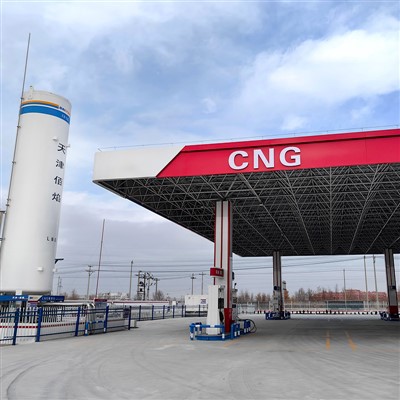
Finally, the system gets tested with a full pressure test. We pressurize the tank to its design pressure (usually around 10 bar, but that varies by tank size) and hold it for 24 hours to make sure there’s no pressure loss—this confirms that all connections and the tank’s integrity are solid. We also check the BOG system to make sure it’s redirecting gas correctly, and we train the ship’s crew on how to operate the tank, check for leaks, and respond to emergencies. We don’t just drop the tank off and leave—we spend two days on-site walking the crew through every step, because even the best tank is useless if the people running it don’t know what to do.
LNG Fueling Station Over the years, I’ve seen firsthand how a bad installation can sink a project before it even starts. That’s why my company doesn’t just supply tanks—we partner with shipyards and ship operators through every step, from fabrication to final testing. We’ve installed tanks on small coastal vessels and large container ships, and every time, the key is attention to detail, not cutting costs. If you’re looking to upgrade your ship’s fuel system with an LNG bunker tank, or just want to talk through how to make sure your installation goes smoothly, feel free to reach out to our team for a no-obligation consultation. We’d be happy to walk you through our process and answer any questions you have.
References
- American Bureau of Shipping. (2021). Guidelines for Installation and Maintenance of Liquefied Gas Bunkering Systems. ABS Global.
- International Maritime Organization. (2020). Interim Guidelines on Safety for Liquefied Natural Gas (LNG) Bunkering Operations. IMO Publication.
- DNV GL. (2019). Code for the Construction and Classification of LNG Fuel Tanks for Marine Use. DNV Group.
- Cryogenic Society of America. (2018). Cryogenic Insulation Systems for Marine Applications. CSA Press.
Tianjin Baiyan Technology Co., Ltd.
With abundant experience, we are one of the most professional lng bunker tank manufacturers and suppliers in China. We warmly welcome you to buy customized lng bunker tank made in China here from our factory. If you have any enquiry about pricelist and quotation, please feel free to email us.
Address: No. 36, Jixian Road, Shuangqiaohe Development Zone, Jinnan District, Tianjin, China
E-mail: sales@tjbaiyan.com
WebSite: https://www.baiyan-tech.com/
