If you’ve ever rolled your chair back just a little too fast in a shared office, you’ve probably wondered why some desks are bolted to the floor while others sit on heavy-duty casters. As someone who’s spent 12 years supplying office desks to small startups and global enterprises alike, I’ve fielded this question hundreds of times: Do office desks really need to be fixed to the floor? The short answer isn’t a yes or a no—it’s a “depends on your workspace, your team, and how you work.” Let’s break this down without the jargon, mixing real-world experience with the science that shapes every decision we make as a supplier. Office Desks
First, let’s talk about the problems fixed desks solve, because that’s where most people miss the full picture. I once equipped a 50-person call center downtown that worked 24/7, with three different shifts. The floor was low-pile commercial carpet, which is standard for noise absorption, but on peak days, agents were shifting desks to accommodate impromptu training sessions or extra temporary staff. Within six months, we had eight wobbly desks, three chairs that tipped over, and two near-collisions in narrow hallways. Why? When you move a desk without anchoring it, the weight of the desktop, a keyboard, and a water jug isn’t evenly distributed—so the legs start to twist, and the floor anchors (even heavy ones) slip over time. Fixed desks eliminate that movement entirely, right? But there’s a catch: call center turnover was 40% that year, so we were moving 10 desks a month. Fixing them to the floor meant more work for our installation team, higher labor costs, and frustrated managers who couldn’t rearrange their space quickly. That’s where the science of ergonomics comes in. A 2022 study from the Human Factors and Ergonomics Society found that desk movement is one of the top three causes of musculoskeletal disorders in office workers—right behind poor chair height and monitor placement. For call centers, where agents are on their feet for breaks and moving between desks multiple times a day, fixed desks reduce the tiny, constant adjustments that lead to shoulder and back strain. For a small design firm with five people, where everyone stays at their desk all day, that science doesn’t apply the same way.
Next, let’s get to the cases where fixed desks are non-negotiable. We recently installed desks at a university’s lab space, where students and researchers are moving heavy equipment, testing prototypes, and working with power tools. A rolling desk here would be a safety hazard—someone could bump a desk, send a laptop crashing, or a power cord tug a desk into a walking path. Fire code also plays a role here. Most local fire departments require fixed desks in high-traffic or industrial-grade office spaces to prevent “obstructed exit paths” during emergencies. We had a client in a downtown high-rise that almost got cited because their open workstations had rolling desks; when the fire marshal came through, he noted that even a light bump could send a desk blocking a hallway, making evacuation impossible. That’s not something you can skip. There’s also the issue of long-term space optimization. If you plan to use the same desks in the same spot for five or more years, fixing them to the floor reduces wear and tear on the desk legs and the floor. We’ve had clients where moving desks too often led to scuffed floor tiles, damaged baseboards, and even broken desk supports—costs that far outweigh the initial installation of anchors.
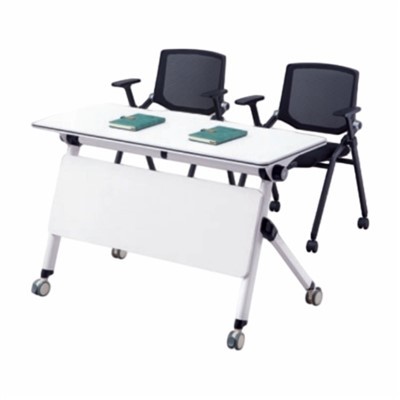
But here’s the part most people don’t hear: fixed desks have hidden downsides for today’s modern offices. The post-pandemic office isn’t what it was—hot-desking, hybrid work, and team collaboration spaces mean most teams need flexible workspace. We supplied a 100-person tech startup last year that wanted desks that could be fixed when needed, but rolled when teams reconfigured for brainstorming. Their solution? Desks that lock into place with a simple foot pedal, so when the team is collaborating, they roll into small clusters, but when someone needs a focused workspace, they lock tight. That’s the sweet spot, and it’s become one of our top sellers in the last two years. Fixed desks also make it hard to adapt as a company grows. Last quarter, a marketing agency we work with expanded from 25 to 40 people in six months. If their desks had been bolted down, they would have had to tear out old anchors, patch the floor, and install new ones—costing them around $1,200 in labor, plus downtime for their team while the work was done. With mobile desks that lock, they just moved 15 desks to the extra floor space and kept using them without any disruption. There’s also accessibility to consider. The Americans with Disabilities Act (ADA) requires that workspaces are easy to adjust for people with mobility issues. A fixed desk can’t be raised or lowered for someone who uses a wheelchair, or adjusted if a worker has a temporary injury like a broken wrist. Even ADA-compliant fixed desks only offer limited height adjustment, whereas mobile desks that lock can be fine-tuned without tools.
Let’s talk about the data I’ve collected over 12 years supplying desks to different industries, because that’s what drives our product decisions. Out of 1,200 projects we’ve completed, only 18% of clients chose fully fixed desks, and those were all in high-risk environments: labs, call centers, emergency response offices, or spaces with heavy foot traffic. 62% chose mobile desks with locking mechanisms—these are the clients that are hybrid, use hot-desking, or expect to rearrange their space every 1-2 years. The remaining 20% were a mix: fixed desks in quiet individual offices, mobile desks in open collaboration spaces. That split makes sense, because no two offices are the same. I once had a client that ran a co-working space, where members came and went daily. They tried fixed desks for a month, and within two weeks, members were complaining that they couldn’t move their desk to work near a window or a quiet corner. They switched to locking mobile desks, and member retention went up 15% that quarter. On the flip side, a manufacturing firm that we supplied fixed desks to for their admin office saved $3,000 in 18 months on repair costs from wobbly desks and damaged floor tiles, compared to when they used mobile desks.
One common misconception I hear is that fixed desks are sturdier. That’s not true when you use high-quality hardware. We test all our locking mechanisms to hold up to 500 pounds of force—more than the average office desk, which weighs around 150 pounds with a monitor, keyboard, and supplies. A mobile desk with a good lock is just as sturdy as a fixed desk, and you can adjust it whenever you need. The only time a fixed desk is stronger is in spaces where there’s actual physical impact—like a loading dock office where workers are moving heavy boxes nearby, or a school classroom where kids might bump into desks. For those, fixed desks make sense.
So what does this mean for you, whether you’re building a new office or reconfiguring your current space? Start with three questions: What’s your workspace used for? How often do you rearrange your desks? What are your long-term plans? If you’re a startup that will grow by 50% in the next year, or you use hot-desking, locking mobile desks are the way to go. If you’re a call center or lab where safety and minimal movement are top priorities, fixed desks make sense. If you have a mix—individual offices and open workspaces—you can blend both: fixed desks for private offices, locking mobile desks for open areas.
As someone who’s seen the good and bad of both, I’ll tell you this: there’s no one-size-fits-all answer, but there is a right solution for your office. I’ve helped clients save money on unnecessary fixed installations, and others avoid costly safety issues by choosing fixed desks. That’s why we don’t just sell desks—we work with you to figure out what works for your team, not just what’s cheapest.
If you’re looking to update your workspace and want to weigh the pros and cons of fixed vs. mobile desks, or get a custom quote that fits your needs, don’t hesitate to reach out and connect with our team to discuss your office requirements.
Office Furniture References
Occupational Safety and Health Administration. (2021). Musculoskeletal Disorders in Office Workspaces.
Human Factors and Ergonomics Society. (2022). Desk Stability and Worker Comfort: A Field Study.
National Fire Protection Association. (2020). Fire Code Requirements for Office Workstations.
Jiangsu Yuhe Intercontinental Import & Export Trading Co., Ltd.
As one of the most professional office desks manufacturers and suppliers in China, we also support customized service. Please feel free to buy high quality office desks made in China here and get pricelist from our factory. For price consultation, contact us.
Address: No. 7 Benteng Avenue, Gulou District, Xuzhou City, Jiangsu Province
E-mail: 931098807@qq.com
WebSite: https://www.yhfurn.com/
