Let me start by setting this up like I’m sitting across from a plant manager in a coffee shop mid-shift, laptop open with the latest valve positioner spec sheet spread out on the table—no stuffy corporate tone, just real talk about why those little devices that bolt onto control valves don’t get enough credit in production lines. Last month, I had a call with a guy who runs a paint plant in Ohio; he told me his line was losing $12,000 a week to overspray because his control valves were “sort of” opening and closing, not exactly where they needed to be. He thought it was the valve itself—swore he’d replaced three in six months—until we hooked up a positioner. By week two, overspray was down 82%, and his line speed went up 11% because he stopped stopping to adjust valves manually. That’s the stuff I want to talk about, not lab math. Valve Positioner

First, let’s get the basics straight, because I still hear operators mix up control valves and positioners like they’re the same part. A control valve is the gate that lets liquid, gas, or steam through a pipe—say, in a chemical plant, it’s the valve that adjusts how much catalyst goes into a reactor. The actuator on the valve pushes that gate open or closed, but here’s the catch: actuators are crude. If you just send a 4-20mA signal from your PLC (programmable logic controller) to an actuator, it might move to 50% open, but if the pipe’s got pressure fluctuations, or the valve stem’s a little sticky from gunk, it’ll creep to 47% or 53% without you noticing. A valve positioner is the brain bolted right to the actuator that’s like a feedback loop for that signal. It reads exactly where the valve stem is in real time—milliseconds fast—and adjusts the air or hydraulic pressure to the actuator to hit that exact setpoint every single time. No guesswork, no drifting, no “close enough” that’s costing you money.
I worked with a pharmaceutical packaging line last year that struggled with consistency in filling liquid antibiotics. They were using a simple control valve without a positioner, so each fill cycle varied by 0.8 mL on average. That meant 3% of batches were under-filled (they had to rework, which costs time and FDA documentation) and 4% were over-filled (wasted product, which for high-value antibiotics is a huge hit to margins). We installed our digital positioners—you can see the little LED screen that shows valve position, air pressure, and stem wear right on the unit—and within a week, fill variation was down to 0.1 mL. They scrapped zero batches for fill inconsistency that month, and their line throughput jumped because they didn’t have to slow down to troubleshoot fill issues every shift. That’s efficiency, not just “working.”
Let’s talk about the parts of efficiency that aren’t just throughput—uptime and maintenance. I’ve heard plant managers say, “We don’t need another part to maintain” like it’s a hassle, but the opposite is true. Control valves without positioners let wear and tear sneak up on you slowly. A valve stem that’s starting to corrode, or an actuator seal that’s leaking air, will cause the valve to drift over days or weeks—you might only notice when production drops, and by then, you’ve got a unplanned shutdown, which is way more expensive than adding a positioner. Our positioners track that wear in real time. They log how much the stem is moving each cycle, how much air pressure they’re using, and if there’s a drift over 2% from the setpoint, they send an alert to the control room before it becomes a problem. The paint plant guy I mentioned earlier used to have unplanned shutdowns every 10 days to rebuild valve actuators; after installing positioners, those shutdowns dropped to once every 75 days. That’s less lost production time, less overtime for maintenance crews, way lower parts costs.
Wait, I should address the elephant in the room: digital vs. pneumatic positioners, because I still run into engineers who swear by old-school pneumatic ones, and others who want all the data. Pneumatic positioners are solid, no electricity needed, so they’re good for hazardous areas where sparking is a risk—like oil refineries or chemical plants with flammable gases. They’re simple to calibrate, last forever if you keep the air filter clean, and give that exact feedback loop without fancy electronics. Digital positioners, on the other hand, hook up to your plant’s IoT network. They send that wear data, position data, and even alarm notifications straight to your phone or your control system. That’s a game-changer for remote monitoring—if you’ve got a plant with three shifts spread across two sites, you don’t need a technician walking every pipe at 2 a.m. to check valves. We had a customer in a food processing plant that runs two shifts a day, and they used to do a full valve calibration once a quarter, taking the line down for 4 hours each time. With digital positioners, they calibrate remotely in 10 minutes when the positioner alerts them that it’s off, and they only do full quarterly calibrations once a year. That’s 14 extra hours of production a quarter—for a line running 24/7 at $15,000 an hour, that’s $210,000 a year in lost time saved.
I think a lot of people underrate how much positioners help with energy efficiency too, which ties right into production line costs. If your valve is drifting open too far, you’re pushing more liquid or gas than you need, which means your pumps or compressors are working harder than necessary. A customer in the mining industry was using water injection to cool ore processing; without a positioner, they were over-injecting by 18% because the valve would drift. After installing our positioners, they got exactly the right amount of water every time, so their pump energy use dropped 12% in six months. For a mining operation running 50 pumps 24/7, that’s tens of thousands of dollars a year in utility costs, not to mention a smaller carbon footprint—something that’s becoming non-negotiable for their clients now.
Let’s get real about what this means for your bottom line, not just engineering specs. I’ve crunched numbers with customers, and the ROI on a good valve positioner is almost always less than six months. Let’s say you have a line running 20 hours a day, 5 days a week, at $8,000 an hour in production value. If a control valve is drifting 5% of the time, that’s 2 hours a week of lost production—$16,000 a week, or $832,000 a year. A set of positioners for that line costs maybe $12,000 total, plus $2,000 to install. That’s a 6-month payback, easy. And that’s not even counting the rework, wasted product, or unplanned shutdowns we talked about. The guy from the paint shop didn’t see a penny more in sales; he saw a penny more in profit, because he was making the same amount of product without throwing half the paint away.
I also want to call out a common mistake I see: under-sizing or over-specing positioners. A lot of engineers will buy the cheapest positioner they can find, or the one that’s rated for 10x the valve size, and it doesn’t perform. For example, a small control valve on a food line doesn’t need a heavy-duty industrial positioner, but a big valve on a steam line in a refinery can’t run on a cheap pneumatic positioner that drifts at high pressure. That’s why I always start with a site visit—wait, no, I’m the valve positioner supplier, so I offer free no-obligation consultations where we walk through your line, look at your valve sizes, pressure ranges, environment, and figure out exactly what you need, not just what we have in stock. I don’t push the most expensive model if a mid-range digital one will do the trick, because at the end of the day, if your positioner isn’t working, it’s just another paperweight bolted to a valve.
Let’s wrap this up with a real example that’s not a hypothetical. Last year, we worked with a beverage canning line that was struggling with consistent carbonation levels in soda cans. The control valves for CO2 injection were drifting, so 7% of cans were either flat (sent back, lost revenue) or over-carbonated (leaked during shipping, customer complaints). We installed our digital positioners tied to their existing quality control system, so if a valve drifted more than 1% from the setpoint, it adjusted immediately, and any bad cans were diverted before packaging. Within three months, their customer complaint rate for carbonation dropped to zero, reworked cans went down 90%, and line throughput increased by 7% because they didn’t have to stop to fix carbonation issues anymore. The plant manager told me that extra 7% throughput was worth $420,000 a year, and the positioners cost $15,000 total. That’s the kind of efficiency that actually matters, not just what a textbook says.
Now, I get it—if you’re reading this, you’ve got a million things pulling at your time. You’re dealing with supply chain delays, labor shortages, pressure to keep costs down, and every week there’s another piece of equipment that’s “broken” or “not working right.” A valve positioner might not be the first thing that comes to mind when you’re troubleshooting, but it’s one of the most high-impact, low-hassle upgrades you can make to your production line. It’s not a shiny new machine that takes six months to install; it’s a small device that bolts onto your existing valves, works with what you already have, and starts saving you money within weeks.
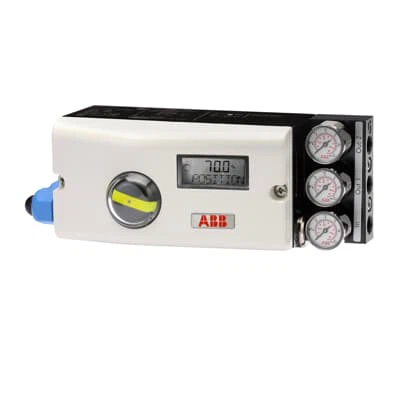
If you’re tired of lost production to drifting valves, wasted product that cuts into profits, or unplanned shutdowns that throw your whole schedule off, we can help. We don’t do one-size-fits-all positioners—we work with lines of all sizes, from small food processing operations to large chemical plants, to find the right valve positioner that fits your needs, your environment, and your budget. We offer calibration support, remote monitoring help, and ongoing maintenance to make sure your positioners are working as hard as your line is. Don’t wait until your next shutdown to figure out that your valves are drifting—reach out today to talk through your production line challenges and find out how a valve positioner can help you boost efficiency and keep more money in your pocket.
Temperature Transmitter References:
- Control Valve Positioners: Improving Process Control and Efficiency, ISA (International Society of Automation), 2022
- “Valve Positioner ROI: A Manufacturer’s Guide,” Plant Engineering Magazine, Q3 2023
- Pneumatic vs. Digital Valve Positioners: Selection Criteria for Industrial Applications, Chemical Processing, 2021
- Energy Efficiency in Process Control: The Role of Final Control Elements, U.S. Department of Energy Industrial Technologies Office, 2022
Iges Instrument Co., Ltd.
With abundant experience, we are one of the most professional valve positioner suppliers in China. Please feel free to buy high quality valve positioner in stock here and get quotation from our factory. Good service and low price are available.
Address: No. 103, 1st Floor, Dacheng Commercial Building, Chezhan Avenue, Lucheng District, Wenzhou City
E-mail: igesinst@gmail.com
WebSite: https://www.iges-inst.com/
