As a seasoned supplier of mast lifts, I’ve witnessed firsthand the critical role that the hydraulic system plays in these remarkable machines. In this blog post, I’ll delve into the intricacies of the hydraulic system of a mast lift, exploring its components, functions, and the benefits it offers. Mast Lift

Understanding the Basics of Hydraulic Systems
At its core, a hydraulic system is a power transmission system that uses liquid (usually hydraulic oil) to transfer energy. The principle behind hydraulic systems is based on Pascal’s law, which states that when pressure is applied to a fluid in a confined space, the pressure is transmitted equally in all directions. This allows hydraulic systems to generate large amounts of force with relatively small input.
Components of the Hydraulic System in a Mast Lift
The hydraulic system of a mast lift consists of several key components, each playing a crucial role in its operation:
- Hydraulic Pump: The hydraulic pump is the heart of the system. It is responsible for converting mechanical energy into hydraulic energy by creating a flow of hydraulic fluid. There are different types of hydraulic pumps, such as gear pumps, vane pumps, and piston pumps, each with its own characteristics and applications.
- Hydraulic Cylinders: Hydraulic cylinders are used to convert the hydraulic energy into linear motion. They consist of a cylinder barrel, a piston, and a rod. When hydraulic fluid is pumped into the cylinder, it pushes the piston, causing the rod to extend or retract. In a mast lift, hydraulic cylinders are used to raise and lower the mast.
- Hydraulic Valves: Hydraulic valves are used to control the flow and pressure of the hydraulic fluid. They can be used to start, stop, and regulate the movement of the hydraulic cylinders. There are different types of hydraulic valves, such as directional control valves, pressure control valves, and flow control valves.
- Hydraulic Reservoir: The hydraulic reservoir is a container that stores the hydraulic fluid. It also helps to cool the fluid and remove any air or contaminants.
- Hydraulic Hoses and Fittings: Hydraulic hoses and fittings are used to connect the various components of the hydraulic system. They must be able to withstand high pressures and temperatures and be resistant to abrasion and corrosion.
How the Hydraulic System Works in a Mast Lift
The operation of the hydraulic system in a mast lift can be divided into several steps:
- Power Generation: The hydraulic pump is driven by an electric motor or an internal combustion engine. As the pump rotates, it draws hydraulic fluid from the reservoir and pressurizes it.
- Fluid Distribution: The pressurized hydraulic fluid is then sent through the hydraulic hoses to the hydraulic cylinders. The direction of the fluid flow is controlled by the directional control valves.
- Lifting and Lowering: When the operator activates the control lever, the directional control valve directs the hydraulic fluid to the appropriate hydraulic cylinder. The fluid enters the cylinder and pushes the piston, causing the mast to rise or lower.
- Pressure Regulation: The pressure control valve ensures that the pressure in the hydraulic system remains within a safe range. If the pressure exceeds the set limit, the valve will open and release the excess pressure.
- Return of Fluid: After the mast has reached its desired position, the directional control valve is switched to the return position. The hydraulic fluid is then returned to the reservoir through the hydraulic hoses.
Benefits of a Hydraulic System in a Mast Lift
The hydraulic system offers several benefits that make it an ideal choice for mast lifts:
- High Power Density: Hydraulic systems can generate a large amount of force with relatively small components. This allows mast lifts to lift heavy loads with ease.
- Smooth and Precise Operation: The hydraulic system provides smooth and precise control over the movement of the mast. This makes it easier for operators to position the lift accurately.
- Reliability and Durability: Hydraulic systems are known for their reliability and durability. They can withstand harsh operating conditions and require minimal maintenance.
- Safety: The hydraulic system is designed with safety features such as pressure relief valves and emergency stop buttons. These features help to prevent accidents and ensure the safety of the operators.
Maintenance and Troubleshooting of the Hydraulic System
To ensure the proper operation of the hydraulic system in a mast lift, regular maintenance is essential. Here are some maintenance tips:
- Check the Hydraulic Fluid Level: The hydraulic fluid level should be checked regularly and topped up if necessary. Low fluid levels can cause the hydraulic system to malfunction.
- Inspect the Hydraulic Hoses and Fittings: The hydraulic hoses and fittings should be inspected for any signs of damage or leakage. Damaged hoses and fittings should be replaced immediately.
- Change the Hydraulic Filter: The hydraulic filter should be changed at regular intervals to prevent contaminants from entering the hydraulic system.
- Test the Hydraulic System: The hydraulic system should be tested regularly to ensure that it is operating properly. This can be done by checking the pressure and flow rate of the hydraulic fluid.
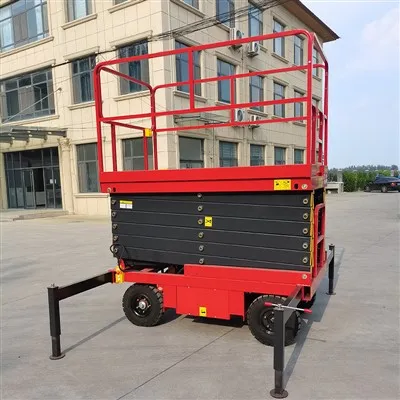
If the hydraulic system in a mast lift malfunctions, it is important to troubleshoot the problem as soon as possible. Here are some common problems and their solutions:
- Low Pressure: Low pressure in the hydraulic system can be caused by a leak in the hydraulic hoses or fittings, a faulty hydraulic pump, or a clogged hydraulic filter. To fix this problem, the leak should be repaired, the hydraulic pump should be replaced if necessary, and the hydraulic filter should be changed.
- High Pressure: High pressure in the hydraulic system can be caused by a faulty pressure control valve or a blockage in the hydraulic system. To fix this problem, the pressure control valve should be replaced if necessary, and the blockage should be removed.
- Slow or Jerky Movement: Slow or jerky movement of the mast can be caused by a low hydraulic fluid level, a clogged hydraulic filter, or a faulty hydraulic cylinder. To fix this problem, the hydraulic fluid level should be checked and topped up if necessary, the hydraulic filter should be changed, and the hydraulic cylinder should be inspected and repaired if necessary.
Conclusion
Articulated Boom Lift The hydraulic system is a vital component of a mast lift, providing the power and control needed to lift and lower heavy loads. By understanding the components, functions, and benefits of the hydraulic system, operators can ensure the proper operation and maintenance of their mast lifts. If you’re in the market for a mast lift, I encourage you to contact us to discuss your specific needs and requirements. Our team of experts will be happy to help you find the right mast lift for your application.
References
- "Hydraulic Systems: Principles, Operation, and Maintenance" by Eugene F. Oberg
- "Mast Lift Operator’s Manual"
Shandong Zhongke Huali Machinery Co., Ltd.
As one of the most professional mast lift manufacturers and suppliers in China, we also support customized service. We warmly welcome you to wholesale discount mast lift in stock here from our factory. For price consultation, contact us.
Address: No. 2 Qubai Road, Qudi Street, Jiyang District, Jinan City, Shandong Province
E-mail: hlizhonggong@163.com
WebSite: https://www.hualiheavy.com/
