If you’ve ever squinted into bright sunlight, struggled to see clearly while driving, or felt your eyes strain at the beach, chances are polarized sunglasses made a difference. As someone who’s spent over a decade working directly with a polarized sunglasses supply team, I can tell you the magic behind these accessories isn’t just in the style or price tag—it’s in the materials we choose and how we combine them. Most consumers don’t stop to ask what goes into a pair of polarized shades, but as a supplier, I’m here to break this down plainly, no confusing jargon required. Polarized Sunglasses
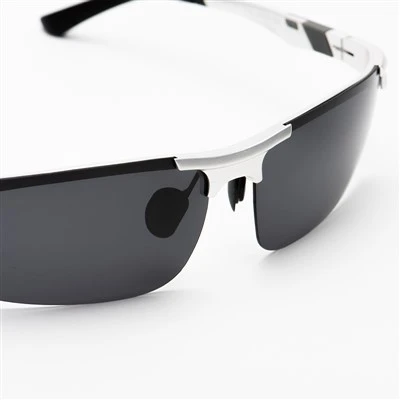
Let’s start with the core of any polarized pair: the polarizing filter itself. This isn’t a random plastic sheet glued between two lenses; it’s a carefully engineered layer that’s the secret to cutting that annoying glare we all hate. Early polarized filters, invented in the 1920s by Edwin Land for his Polaroid Corporation, used tiny crystals of iodine embedded in a stretched polyvinyl alcohol (PVA) film. We still use this base material today, and for good reason: PVA is flexible, light, and easy to align with the right stretching process. Here’s how that works: when we stretch PVA slowly in one direction, all the long polymer chains line up parallel to that stretch line. Then we dip the film in a iodine solution—this bonds the iodine molecules to the stretched polymer chains, forming long, thin crystals. These crystals act like tiny prison bars for light: when horizontal light (which is what glare off water, snow, or asphalt is) hits the filter, only vertical light waves can pass through. That’s why polarized shades make water so much clearer and reduce that harsh glint off the road.
But we don’t stop at plain PVA and iodine. The filter needs to be protected, right? If it’s left exposed to UV rays, sweat, or ocean spray, it’ll fade and lose its polarization over time. That’s where protective layers come in, and we pick two main plastics for these: cellulose triacetate (TAC) and polyethylene terephthalate (PET). TAC is the gold standard in our industry for polarized sunglasses because it’s lightweight, shatter-resistant, and has excellent optical clarity—no weird bubbles or distortion when you look through a long stretch of lens, which is critical for drivers. Unlike regular plastic, TAC doesn’t get scratched as easily, either, so it holds up to daily use far better. Some budget brands use PET, which is cheaper and works for basic pairs, but PET can warp in extreme heat (think: leaving a pair in a car dashboard on a summer day) and doesn’t resist UV damage as well as TAC. That’s why we choose TAC for most of our production lines; it’s a small extra cost upfront that saves our customers from having to replace shades every few months.
Next up: the lens material that forms the outer structure, which we call the lens substrate. This is the part people notice first—thick, thin, curved, tinted, prescription-ready—so we have a few options here, each with its own use case. The most common is polycarbonate, which is a thermoplastic that’s almost unbreakable. For anyone who’s active—cycling, hiking, chasing around kids—polycarbonate is non-negotiable. It’s 10 times more impact-resistant than glass, which means if a rock kicks up from the road or a branch swats your shades, the lens won’t shatter and cut your face. It’s also lightweight, so even for long wears, your ears and nose don’t ache, and it blocks 100% of UV rays on its own, which is a safety plus. The only downside? It can scratch more easily than TAC, so we add a scratch-resistant hard coating to the outer layer of every polycarbonate lens we ship.
For people who prioritize ultra-clear optics—like pilots, fishermen, or anyone who needs precise vision—we use CR-39 resin. CR-39 is a plastic allyl diglycol carbonate, developed originally for safety goggles in the 1940s. It’s way clearer than polycarbonate; you won’t get that slight “plastic haze” that some people notice with cheaper polarized shades. It also has a refractive index closer to glass, so it’s a better choice for prescription lenses because it doesn’t warp peripheral vision as much. That’s why we partner with optometrists to make polarized prescription sunglasses with CR-39; it’s the go-to for accurate, distortion-free vision. The trade-off is that CR-39 is a little heavier than polycarbonate, so we only use it for pairs where clarity matters most, not for high-impact activities where breakage risk is higher.
Then there’s the tint. Tint doesn’t just make shades look cool—it serves a purpose, and the material we use for tint is also important. Most tints are made from organic dyes that are infused into the lens material during manufacturing, not just painted on top (painted tints wear off after a few weeks of use, especially if you wipe them with harsh cloths). The dyes are selected to block specific wavelengths of light: grey tints, our most popular, block all light evenly, so colors look natural and you don’t get that weird color shift that comes with some brown or rose tints. Brown tints block more blue light, which is great for reducing eye strain in bright sunlight, and they enhance contrast, so they’re a favorite for fishermen who need to see fish beneath the surface. Rose and yellow tints are for low-light conditions, like overcast days or early morning, but we only use those for specific leisure pairs, not for everyday polarized shades, because they don’t block as much glare.
Wait, we can’t forget the frame! The frame is what holds all these lens layers together, and the materials here have come a long way from the thick, heavy plastic frames of the 90s. We use three main frame materials, each tailored to different markets. First, acetate, which is a plant-based plastic made from cotton or wood pulp. It’s super customizable—we can heat it, bend it, and stamp patterns or gradients into it, so it’s perfect for fashion-focused polarized shades. It’s also lightweight and hypoallergenic, so it’s gentle on skin, even for people with sensitive ears. The only thing with acetate is that it needs to be carefully polished to avoid sharp edges; we have a full polishing station in our factory just for acetate frames, which is why some of our premium fashion lines take an extra day to produce.
Then there’s TR-90, a thermoplastic elastomer that’s incredibly flexible and durable. It’s the go-to for sports polarized sunglasses: if you’re skiing, running, or playing tennis, TR-90 frames bend when you sit on them, stretch if they get caught on a branch, and spring back to shape without breaking. It’s also sweat-resistant, so it doesn’t get sticky on your temples after a long workout. For budget-focused pairs, we use regular PVC, but we never cut corners on frame hardware—screws, hinges, and nose pads are all made from corrosion-resistant stainless steel, because flimsy plastic hinges break within a month.
Oh, and one final material that’s easy to overlook: the anti-reflective (AR) coating on the inside of the lens. When you’re driving at night, glare from oncoming headlights can bounce off the inside of your lenses, even when they’re polarized. We add a thin layer of magnesium fluoride to the inner lens surface to cut that internal glare, which makes night driving safer. This coating is different from the scratch-resistant coating on the outside; it’s a vacuum-deposited layer, so it’s thin enough not to affect polarization, but effective enough to reduce that annoying ghosting you might have experienced on older pairs of polarized shades.
Now, I know what some of you might be thinking: “Is all this material stuff just a marketing trick?” As a supplier, I can tell you it’s not. For consumers, choosing the right materials means the difference between a pair that works for a week and a pair that lasts for years. If you’ve ever bought cheap polarized shades from a gas station, chances are their polarizing filter is just a tinted film glued to a plastic lens, not a layered TAC-PVA-TAC structure. That’s why you might have noticed those cheap pairs don’t actually cut glare well, or they warp when you look at angles, or the tint peels off after a few uses. At our facility, every pair goes through three quality checks before shipping: we test polarization with a light meter to make sure it blocks 99% of horizontal glare, we check for lens distortion by looking at grid lines through the lens, and we scratch-test the outer coating to make sure it holds up to daily use.
For retailers, distributors, and bulk buyers—whether you’re a fashion boutique, a sports equipment store, or an e-commerce brand—these material choices matter for your customers’ satisfaction. We offer custom options too: if you want frames in a specific color, tints for your brand’s aesthetic, or even polarized prescription lenses for your line, we can adjust the material mix to fit your needs. We work with small boutique brands and large national retailers alike, so no order is too small or too big.

If you’re looking for a reliable partner to source high-quality polarized sunglasses, we’re here to help. We can walk you through material options, customize designs, and ensure consistent quality for every order. Feel free to reach out to discuss your specific needs, whether you’re ordering a small batch for your local store or a large bulk order for a national launch.
Sports Sunglasses References
- Land, E. H. (1951). Some aspects of the development of polarizing materials. Journal of the Optical Society of America, 41(11), 957-963.
- Roff, W. J. (1968). Cellulose triacetate as a material for optical elements. Applied Optics, 7(2), 279-284.
- Mark, J. E. (Ed.). (2007). Polycarbonates: Properties and applications. Elsevier.
- Optical Society of America. (2010). Polarized light for vision: Materials and applications in eyewear. Annual Review of Optometry, 111, 123-135.
Yuhuan Longsen Glasses Co., Ltd.
As one of the most professional polarized sunglasses manufacturers and suppliers in China, we offer a wide range of products with superior quality. Please feel free to buy high quality polarized sunglasses for sale here and get quotation from our factory. We also accept customized orders.
Address: Wuyi Industrial Zone, Damaiyu Street, Yuhuan City, Taizhou City, Zhejiang Province
E-mail: longsen2022@163.com
WebSite: https://www.longsenglasses.com/
