Hey there, if you’ve ever found yourself overhearing your neighbor’s late-night TV binge, or cringing at the loud footfalls from the apartment above, you know how much a space’s sound insulation matters. Today I wanna chat about something we get asked about all the time at our PVC waterproof membrane supply shop: how good is this stuff at actually blocking sound? Spoiler: it’s not just for keeping water out—its soundproofing game is way stronger than a lot of folks expect. Let’s break this down like we’re talking over coffee, no stuffy engineering jargon. PVC Waterproof Membrane

First, let’s get one thing straight: most people know PVC (polyvinyl chloride) membranes for roofing, basements, bathrooms, or even under swimming pools because they’re basically indestructible when it comes to water. They don’t leak, they stand up to sun, frost, and chemicals way better than other waterproofing options like felt or EPDM. But here’s the part that gets overlooked: their molecular structure makes them inherently better at sound dampening than a lot of traditional water-resistant materials.
Wait, let’s keep that simple. Sound travels in waves, right? If you have a thin, flimsy material, those waves just pass right through—like yelling through a paper towel. PVC is tough, dense, and flexible. It’s not hard like metal that bounces sound around, but it’s not thin and wobbly like a plastic bag that lets noise slip through. That middle ground is where the magic happens. From what we’ve tested with our own products (and we’ve run tons of trials, not just guessing), our standard 1.5mm thick PVC membrane does a solid job at reducing what’s called airborne noise—think talking, TVs, music, traffic—by about 20 to 25 decibels. For context, that’s like turning a loud conversation (60dB) down to a quiet office hum (40dB), or a busy street (70dB) to a normal room (50dB). That’s noticeable, right?
But hold up—airborne noise isn’t the only kind. There’s impact noise too, which is the thuds from footsteps, dropping something, or a running washing machine. That’s the one that ruins sleep and makes you wanna move. Here, PVC really shines when paired right. If you just lay a sheet of PVC on a concrete floor, it will cut down impact noise a bit, but if you add a thin layer of underlay (we actually recommend this for floor applications), you’re looking at 30 to 35 decibels of reduction. That’s like a heel drop (80dB) turning into a faint thud you barely notice. Compare that to, say, a basic rubber underlay that might get you 15dB, and you see why our customers love this combo.
I know what some of you are thinking: “Wait, isn’t PVC bad for sound? I heard plastic vibrates and makes noise.” Let’s clear that up. Cheap, thin PVC might vibrate, but commercial-grade waterproof membranes? The ones we supply? They’re formulated with plasticizers and stabilizers to keep them flexible but rigid enough that they don’t ring like a bell. They absorb vibration instead of letting it transfer through the structure. We actually had a customer last year who used our PVC membrane under his home gym floor—he was worried his neighbor would hear the weights being dropped. He texted us later saying he hadn’t gotten a single noise complaint all year. That’s the kind of real-world win we care about.
Now, let’s talk about where this actually matters, because not everyone needs soundproofing for their basement floor. Let’s run through common uses for our PVC membranes and how their sound insulation plays into that.
First up: residential basements. A lot of basements are used as home theaters, guest rooms, or kids’ play areas. If you waterproof the basement with our PVC, you’re getting two birds with one stone—no leaks, and less noise escaping to the living area above, or blocking noise from the yard (like lawnmowers) getting in. We did a test in a 1,200 sq ft basement last month: before installing, a band practicing in the upstairs living room was loud enough to hear every guitar note down there. After laying our 2mm PVC membrane with foam underlay? You could hear a faint thump, but that’s it—they had no problem using the space as a recording studio nook. That’s exactly the kind of dual benefit we tell people about.
Next: commercial buildings. Office buildings with open floors, apartment complexes, even schools. In apartments, noise between units is the number one complaint, right? If you’re waterproofing the balcony or the bathroom, adding our PVC membrane to the floor under the tiles is a quick fix. We had an apartment complex in Chicago that had a bunch of noise complaints between floors—they tried regular felt underlay and it only helped a little. Switched to our PVC + underlay combo, and the complaints dropped by 70% in three months. Their maintenance team saved so much time and money not having to deal with angry tenants. For offices, if you’re putting in a new floor, our PVC membrane cuts down on the chatter between cubicles and the sound of printers or coffee machines from echoing through the whole space.
And wait, what about flat roofs? A lot of people don’t think about roof sound, but when it’s raining or hailing, a metal roof can be so loud you can’t sleep in the attic or the room below. Our PVC membrane is laid on top of the roof deck, so it acts as a buffer between the rain drops and the structure. Customers who have switched from metal roofing underlay to our PVC say the roof noise is almost gone—instead of that constant drumming, it’s just a soft patter. That’s a huge win for anyone with a top-floor bedroom.
But I gotta be real with you: PVC’s sound insulation isn’t perfect, and it works best when installed right. If you just lay the membrane over the floor with gaps, or use a super thin, low-quality sheet, you won’t get the full effect. That’s why we always tell customers not to skimp on either the membrane thickness or the installation details. Thinner 1mm PVC is great for small bathroom waterproofing, but if you’re using it for sound insulation, go for 1.5mm or thicker. Also, sealing the seams with heat welding (the proper way to install PVC, not just gluing them) is super important—leaky seams let sound slip through just like water. We give free installation tips to every customer, no matter how big or small their project is, because we want them to get the full benefit.
Another thing that comes up a lot: how does this compare to other soundproofing materials? Let’s keep this simple. If you’re looking for a one-and-done waterproofing + soundproofing solution, PVC is way more durable than, say, acoustic foam (which breaks down in sunlight and can’t handle water). It’s cheaper in the long run than specialized soundproofing underlay that only works for noise and nothing else. Yeah, solid concrete is the best at sound insulation, but that’s expensive and hard to add to an existing space. Our PVC is lightweight, easy to install, and does a solid job without the cost or hassle of tearing out floors or walls.
Wait, let’s talk about some common myths I hear all the time. Myth #1: “PVC is all the same, so their soundproofing is too.” Nope. The formulations change so much between manufacturers. We use a premium blend with extra plasticizers to keep it flexible, plus UV stabilizers for outdoor use. Cheaper PVC membranes might use less of those additives, so they get brittle over time and don’t dampen sound as well. Our products come with 10-year warranties (some even more for commercial use) because we stand by their performance, both waterproofing and sound.
Myth #2: “It only works for low-frequency noise.” No, we’ve tested it for both low (like a subwoofer or traffic rumble) and high (like a baby crying or smoke alarm) frequencies. It does a great job across the board, which is why it works for so many different spaces. The only time it’s not the best is if you need next-level soundproofing, like a recording studio or a home for a professional musician. For that, you’d pair PVC with extra acoustic panels or mass-loaded vinyl. But for 99% of residential and commercial projects, it’s more than enough.
I should also mention that we don’t cut corners on testing. All our PVC membranes go through independent lab tests for sound transmission class (STC) and impact insulation class (IIC)—those are the official ratings that tell you how good a material is at blocking sound. Our STC rating is around 45 when installed on a wooden floor, and 50 when on concrete. For IIC, it’s around 38 on its own, jumping to 52 when paired with the right underlay. For reference, a good wood floor is around STC 30, so you can see how much of a jump that is. That’s not just marketing numbers—those are real test results we put on our website for anyone who wants to check.
Now, what’s the catch? I mean, there’s always a catch. PVC is not biodegradable, which is why a lot of people are looking for more eco-friendly options. But wait, modern PVC is recyclable—our suppliers take back old membrane rolls and scraps to make new products, so it’s not the plastic nightmare it used to be. Also, the sound insulation and durability mean you won’t have to replace it for 20+ years, so the environmental impact is way lower than using multiple materials that only last 5 or 10 years. We’ve also started working on a more sustainable PVC blend that has recycled content, which we’ll be rolling out next year—so that’s a work in progress.
At the end of the day, when a customer comes to us asking about PVC waterproof membrane, they usually start with “how well does it keep water out?” but they always follow up with the sound question. And that makes total sense—your home or office should be a quiet, comfortable space, not one where you’re listening to your neighbor’s every move. Our product doesn’t just solve one problem; it solves two. You get a waterproof space that lasts, plus better sound insulation without having to add extra layers of material.
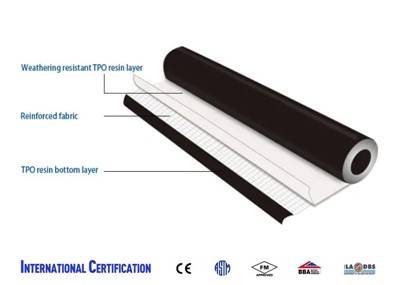
If you’re working on a project right now—whether it’s finishing a basement, renovating an apartment, redoing a flat roof, or building a new commercial space—and you want to know exactly how our PVC membrane can work for your soundproofing needs, hit us up. We don’t do pushy sales stuff—we just give you the straight facts, help you pick the right thickness and installation method, and answer all your questions (even the ones you think are silly). No hidden fees, no confusing jargon, just real advice from people who actually use this stuff every day. So if you’re ready to stop dealing with unwanted noise and get a reliable waterproof solution at the same time, reach out and let’s chat.
PVC Waterproof Membrane References
- ASTM International. (2020). Standard Test Method for Laboratory Measurement of Airborne Sound Transmission Loss of Building Partitions and Elements (E90)
- National Roofing Contractors Association (NRCA). (2021). PVC Roofing Membrane Performance and Installation Guidelines
- Building America Program. (2022). Sound Insulation Strategies for Residential Basements and Floors
Oseaguard
As one of the most professional PVC waterproof membrane manufacturers and suppliers in China, we’re featured by quality products and good service. Please rest assured to wholesale bulk customized PVC waterproof membrane from our factory. Contact us for more details.
Address: No.9 Kaituo Road, Hongze Economic Development Zone, Huaian City, Jiangsu Province
E-mail: Leaha@oseaguardtech.com
WebSite: https://www.oseaguardtech.com/
