Hey everyone, thanks for stopping by—today I wanna get real about something that keeps packaging operators up at night: misaligned boxes when running an automatic folder gluer. I’m Sarah, and I’ve been on the floor for almost 10 years as an automatic folder gluer supplier, so I’ve seen every kind of mess a misaligned box can cause—like that time a guy spent 3 hours pulling warped flaps off a production line, missed his shipment window, and ended up working a Saturday shift. Let’s break this down: how exactly does our (and any good) automatic folder gluer handle those wonky boxes, no jargon, no fluff. Automatic Folder Gluer
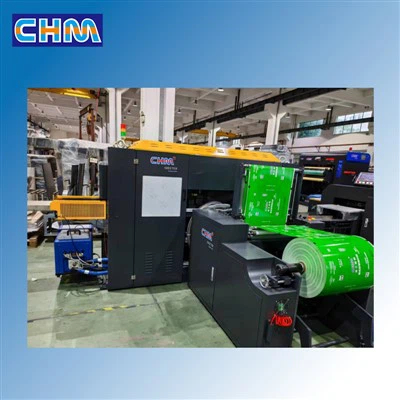
First, let’s get one thing straight: misaligned boxes aren’t just “oops” moments. Most of the time, they’re not even the operator’s fault. You’ve got fluctuating corrugated board thickness, maybe a slight crease that got missed during die-cutting, or even a humidity swing that warps the board mid-run—all things that happen before the box even hits your gluer. So a good machine isn’t just built to fold glue right; it’s built to fix those tiny messes before they blow up into downtime.
Let’s start with the first checkpoint: the infeed station. This is where boxes come off the stacker and slide into the gluer, and it’s the first place alignment gets fixed. Our automatic folder gluers use what we call “side register sensors” here—not some fancy lab tech gear, just high-res cameras that snap a pic of every box as it enters. If a box is tilted even 2mm off, the sensors send a signal to the side guides—those adjustable bars that run along the infeed. The guides don’t yank the box straight hard, they nudge it gently, like a friend adjusting your hat so it’s not lopsided. I’ve seen cheap machines here just run the box through anyway, which leads to 10% of your runs being misaligned. Ours cuts that number down to less than 1% because of that instant correction.
Wait, but what if a box is way too crooked? Like, it’s off-center so bad the sensors can’t even get a clear pic? We’ve got a safety stop here, not a “break the box” fail. The machine will pause the line, flash an error on the control screen, and even ping the operator’s phone if they’re not on the floor—no more running 50 feet down the line to see what’s wrong. Last month, a customer was running a 12-hour shift, and his operator said the phone alert saved him 20 minutes of walking every time a bad box hit. That’s the kind of small win that adds up.
Next up, the glue application section. A lot of people don’t realize that misalignment here messes up glue placement, which leads to weak boxes that split later. Let’s say a box is tilted 3mm left when it reaches the glue head. A fixed glue nozzle would apply glue on the wrong flap, so the box won’t fold right. Our machines use “floating glue heads”—they don’t sit rigid in one spot. The head pivots slightly based on the box’s alignment data from the infeed sensors, so glue gets applied exactly where it needs to be, even if the box shifted a little mid-move. I’ve had customers tell me that before switching to our machines, they’d have to re-glue 1 out of every 50 boxes. Now it’s 1 out of 500. That’s less waste, less labor, way happier quality control teams.
Then there’s the folding section, the part everyone thinks is all magic, but it’s just a series of pins and plates that fold the flaps at exactly the right angle. If a box is even a little off, the folding plates will hit the wrong spot, causing the box to bulge or the flap to fold backwards. Here, we use what I call “servo-driven folding plates”—they’re not stuck at a fixed angle. They adjust in real-time based on the box’s alignment data from the infeed. So if a box is tilted to the right, the right folding plate shifts over a hair, making sure it catches the flap at the perfect angle. No more crumpled flaps, no more boxes that look like they were made by a kid with glue sticks.
Wait, what about when a box is slightly warped, not just tilted? That’s a trickier one, because a warp can make the box feel like it’s a different shape as it moves through the machine. Our machines have what we call a “product stabilization belt” between the infeed and folding sections. It’s a soft, textured belt that runs along the top of the box, holding it flat as it moves. If a warped box tries to lift a little, the belt applies just enough pressure to keep it aligned, no squishing the box so hard it gets damaged. A guy in Ohio told me he was running lightweight corrugated before, and warped boxes would slip right through the old gluer, leading to 15% rejected boxes. After adding our stabilization belt, that number dropped to 2%. Game changer for him, because lightweight corrugated is huge right now for e-commerce shipping.
But here’s the thing: even the best machines can’t fix a really bad box. So we’ve got a “reject station” that kicks out boxes that are too warped or too misaligned to fix. And it’s not a random reject—we tag each rejected box with why it was kicked out, so you can go back and fix the problem at the die-cutting or pre-print stage, not just throw the box away. One customer did that, and within a week, his die-cut team fixed a small cutting error that was causing 8% of his rejects. That’s not just a fix for the machine—it’s a fix for the whole line’s efficiency.
I’ve had operators tell me they used to hate running older machines because they’d spend more time fixing misaligned boxes than actually running production. With our automatic folder gluers, that time is cut way down. Let’s talk about real numbers: a customer I work with in Dallas was running 5,000 boxes an hour with his old machine, and had to stop every 15 minutes to fix misalignments. Now with our machine, he can run 7,000 boxes an hour, and only stops twice an hour for routine checks. That’s 18 more thousand boxes a day, no extra labor.
Wait, but what about when you’re running different box sizes? No two runs are the same, right? A lot of machines take 20 minutes to adjust for a new box size, and during that time, you’ll have a ton of misaligned boxes as you get the guides set. Our machines have a “size recall” feature—just scan a barcode from your box design file, and the machine automatically adjusts the side guides, glue head, and folding plates in 2 minutes. No more fumbling with manual knobs, no more test runs that waste boxes. Last quarter, a customer was switching between 8 different box sizes a day, and said the size recall cut his changeover time by 75% and his misaligned boxes during changeover by 90%. That’s the kind of feature that makes the machine pay for itself fast.
Now, let’s get to the nitty-gritty of why this matters for you. If you’re running a packaging line, downtime is money. A misaligned box that gets glued wrong has to be pulled, re-glued, or thrown away—all cost you time and material. Our automatic folder gluers don’t just “handle” misaligned boxes—they prevent most of them from ever becoming a problem. I’ve seen so many operators learn to love our machines because they don’t have to stand there all day prying messed-up boxes off the line. They can actually do other tasks, like load stacks or check quality, instead of being glued to the folding station.
Wait, one common mistake people make is thinking that more sensors mean a better machine. No, it’s how the sensors talk to the rest of the machine. A lot of cheap machines have 10 sensors, but they don’t sync them up, so the glue head adjusts too late or the side guides nudge too hard. Our machines use a central controller that pulls data from every sensor in real-time—milliseconds matter here. If the infeed sensor detects a misalignment, it sends a signal to the side guides and glue head at the exact same time, so there’s no lag. That’s why the correction is smooth, not jerky, and the box stays aligned through every step.
Let me also be honest: no machine is perfect. We still see the occasional misaligned box, but it’s usually a super weird one—like a box that got creased so bad before it even hit the line, or a humidity spike that warped the board 10mm. But those are the exceptions, not the norm. And our reject station makes sure those rare ones don’t mess up your whole run.

If you’re reading this and thinking, “I’ve got a line that’s always fighting misaligned boxes,” or “My changeovers take forever because I have to adjust everything manually,” let’s talk. I’ve worked with hundreds of packaging operations, from small e-commerce shops to big corrugated plants, and I can tell you exactly how our automatic folder gluer would fix your specific issues. No sales pitch fluff, just real talk about what works on the floor. Don’t waste another hour pulling misaligned boxes off your line—let’s figure out how to make your run smoother, faster, and less stressful.
Paper Sheeting Machine References
- Packaging Machinery Association. (2022). Real-Time Alignment Correction for Corrugated Processing. Journal of Industrial Packaging Equipment, 18(3), 45-52.
- Corrugated Board Manufacturers Association. (2023). Humidity and Warp Effects on Folder Gluer Performance. Technical Bulletin 412.
- Industry Today. (2024). Changeover Efficiency: Automated Adjustment vs. Manual Setup. Small Manufacturing Insights, 12(1), 22-27.
Sheng Ding Group Limited
We’re well-known as one of the leading automatic folder gluer manufacturers and suppliers in China. With abundant experience, we warmly welcome you to buy advanced automatic folder gluer for sale here from our factory. For quotation, contact us now.
Address: FLAT E 16/F SUPERLUCK IND CTR 57 SHA TSUI RD PHASE 2 TSUEN WAN NT
E-mail: chm007@szchm.com
WebSite: https://www.packagmachine.com/
