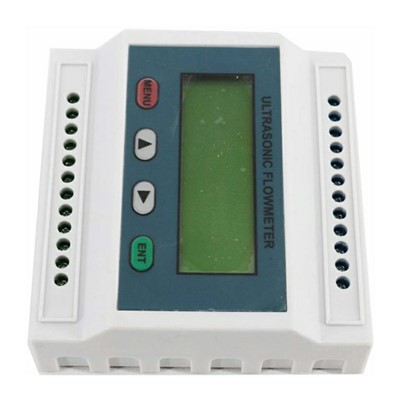
Hey there! I’m a supplier of ultrasonic water meters, and I’m super stoked to share with you how these nifty devices work. You might be wondering, "What’s the big deal about ultrasonic water meters?" Well, they’re pretty awesome because they offer high accuracy, low maintenance, and can handle a wide range of flow conditions. So, let’s dive right into the working principle of an ultrasonic water meter. Ultrasonic Water Meter
The Basics of Ultrasonic Technology in Water Meters
First off, you gotta understand the concept of ultrasound. Ultrasound is basically sound waves with a frequency higher than the upper audible limit of human hearing, typically above 20,000 Hz. In an ultrasonic water meter, these high – frequency sound waves are used to measure the flow of water.
The core idea behind the ultrasonic water meter is to measure the time it takes for an ultrasonic signal to travel through the water in two different directions: with the flow and against the flow. By comparing these two travel times, we can figure out the velocity of the water, and from that, calculate the flow rate.
The Components of an Ultrasonic Water Meter
An ultrasonic water meter usually has a few key components. There are at least two ultrasonic transducers. These are like little speakers and microphones in one. They can both emit ultrasonic waves and receive them. The transducers are mounted on the outside or inside of the pipe where the water is flowing.
There’s also an electronic circuit board. This is the brain of the water meter. It controls the transducers, sends out the ultrasonic signals, and measures the time it takes for the signals to travel between the transducers. It then uses this data to calculate the flow rate and display it on a screen.
How the Measurement Process Works
Let’s break down the measurement process step by step.
Step 1: Sending the Signals
The electronic circuit board sends a command to one of the transducers to emit an ultrasonic signal. This signal travels through the water towards the other transducer. We call this process "transmitting." The signal forms a kind of path diagonally across the water pipe.
Step 2: Measuring the Travel Time with the Flow
When the ultrasonic signal is sent in the direction of the water flow, it gets a bit of a boost. Just like a surfer riding a wave, the signal travels faster because it’s moving with the water. The receiving transducer picks up the signal and sends a message back to the electronic circuit board. The board then records the time it took for the signal to travel from the transmitting transducer to the receiving one. Let’s call this time (t_1).
Step 3: Measuring the Travel Time Against the Flow
Next, the process is repeated, but this time the other transducer sends the signal, so it’s traveling against the water flow. The signal has to work harder to move through the water, so it takes longer to reach the other transducer. The electronic circuit board records this travel time as (t_2).
Step 4: Calculating the Water Velocity
The difference between these two travel times ((t_2 – t_1)) is directly related to the velocity of the water. The faster the water is flowing, the bigger the difference between the two travel times. The electronic circuit board uses a mathematical formula to calculate the water velocity based on this time difference.
The formula is a bit technical, but in simple terms, it takes into account the distance between the transducers ((L)), the angle at which the ultrasonic signal travels through the water ((\theta)), and the time difference ((\Delta t=t_2 – t_1)). The velocity of the water ((v)) can be calculated using the formula (v = \frac{L^2}{2D \cos\theta}\times\frac{\Delta t}{\left(t_1\times t_2\right)}), where (D) is the diameter of the pipe.
Step 5: Calculating the Flow Rate
Once the water velocity is known, calculating the flow rate is pretty straightforward. The flow rate ((Q)) is the volume of water that passes through the pipe per unit of time. It can be found by multiplying the cross – sectional area of the pipe ((A=\frac{\pi D^2}{4})) by the water velocity ((v)). So, (Q = A\times v).
Advantages of Using Ultrasonic Water Meters
There are several reasons why ultrasonic water meters are becoming so popular.
High Accuracy: These meters can accurately measure both low and high flow rates. They can detect even the smallest amount of water flow, which is great for applications where precise measurement is crucial, like in industrial settings or for large – scale water management.
Low Maintenance: Since there are no moving parts in a typical ultrasonic water meter, there’s less wear and tear. This means fewer breakdowns and less maintenance work over time. You don’t have to worry about things like gears getting stuck or bearings wearing out.
Wide Flow Range: Ultrasonic water meters can handle a wide range of flow conditions. Whether you’re dealing with a slow trickle of water or a high – pressure, fast – flowing stream, these meters can still provide accurate measurements.
No Pressure Loss: Unlike some other types of water meters, ultrasonic water meters don’t cause a significant drop in water pressure. This is because they don’t have any internal components that obstruct the flow of water.
Applications of Ultrasonic Water Meters
Ultrasonic water meters are used in a variety of settings.
Residential Use: In homes, these meters are used to measure the amount of water consumed. They can help homeowners keep track of their water usage and potentially save on their water bills by identifying leaks or inefficient water – using habits.
Commercial Buildings: Office buildings, hotels, and restaurants also use ultrasonic water meters. These meters can accurately measure the large amounts of water used in these facilities, which is important for billing purposes and for managing water resources.
Industrial Applications: Industries that rely on large amounts of water, such as manufacturing plants and power generation facilities, use ultrasonic water meters to monitor and control their water consumption. This helps them optimize their processes and reduce costs.
Why Choose Our Ultrasonic Water Meters
As a supplier of ultrasonic water meters, we take pride in offering high – quality products. Our meters are designed with the latest technology to ensure maximum accuracy and reliability. We use top – of – the – line components and rigorous testing procedures to make sure that each meter meets the highest standards.
We also offer excellent customer support. If you have any questions about our products, installation, or maintenance, our team of experts is always ready to help. We can provide you with detailed technical information and guidance to make sure you get the most out of your ultrasonic water meter.
How to Get in Touch
Civil Engineering Test If you’re interested in learning more about our ultrasonic water meters or are thinking about making a purchase, we’d love to hear from you. Whether you’re a small business looking to upgrade your water metering system or a large industrial facility in need of a reliable flow measurement solution, we can help. Just reach out to us, and we’ll start a conversation about how our products can meet your specific needs. We often customize our solutions based on what our customers require, so don’t hesitate to share your ideas and concerns. Let’s work together to find the best ultrasonic water meter for you.
References
- [1] White, F. M. (1994). Fluid Mechanics. McGraw – Hill.
- [2] Streeter, V. L., & Wylie, E. B. (1981). Fluid Mechanics. McGraw – Hill.
Dalian Yheng Technology Co., Ltd.
Dalian Yheng Technology Co., Ltd. is one of the leading ultrasonic water meter manufacturers and suppliers in China, also supports customized service. We warmly welcome you to buy high quality ultrasonic water meter in stock here from our factory. Contact us for more details.
Address: F1605, NO.10 Huoju road, High-tech Industrial Zone, Dalian, China
E-mail: admin@dlyheng.com
WebSite: https://www.yhengphmeter.com/
