If you’re running a fabrication, construction equipment, or heavy machinery manufacturing business, the decision to bring a heavy-duty welding robot into your facility isn’t just an upgrade—it’s a strategic move to tackle consistent quality gaps, cut labor costs, and meet the ever-growing demand for large-scale, thick-metal welds that human welders struggle to complete repeatedly. As a supplier who’s worked directly with workshops ranging from small local fabricators to global heavy equipment OEMs for over 18 years, I’ve seen way too many businesses jump into buying the first robot they see, only to end up with a unit that can’t handle their workload, breaks down constantly, or costs more to operate than it saves. Today, I’m breaking down the real, actionable steps to choose a heavy-duty welding robot that fits your specific business—no industry jargon, no one-size-fits-all pitches, just the hard truths I’ve learned side-by-side with customers. Heavy-Duty Welding Robots
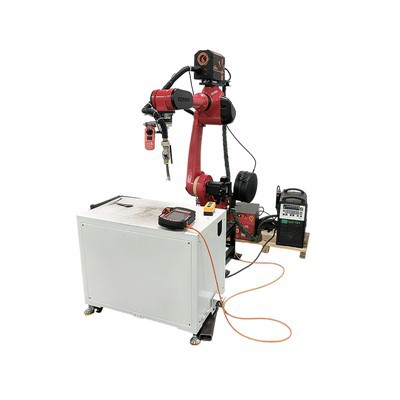
Let’s start with the most non-negotiable part of any heavy-duty welding robot: its load capacity. This isn’t just the number on the spec sheet; it’s the weight of the metal assemblies you’ll be welding, including the welding torch, wire feeder, and any custom fixtures you need to bolt on to fit parts like 2-inch thick steel truck frames, crane booms, or construction bucket components. Last year, I worked with a mid-sized steel fabrication shop in the Midwest that bought a entry-level robot rated for 10 kg of arm load, because it was the cheapest unit on the market for its small weld bay. Six months later, they were struggling: their signature product, a 400-pound custom agricultural plow frame, required a robotic arm that could hold the heavy welding torch and reach into tight, deep gaps without bending or warping. That 10 kg robot couldn’t handle the 15 kg setup they needed, so they were relying on human welders to finish the heavy joints, negating any productivity gains they’d expected. By the time they upgraded to a 30 kg heavy-duty model (the minimum I recommend for most heavy fabrication), they’d wasted $12,000 on the wrong unit and lost 3 weeks of production time on rush orders. If your parts regularly exceed 500 pounds total weight, you’ll want to look for robots with 50 kg or higher load capacity, plus reinforced joint components that prevent wear when working on large, irregular parts that require extended reach. Don’t just guess—pull up your last 6 months of project blueprints, note the largest and heaviest assembly you’ve welded, and add 10% to that number as a buffer for future projects. Heavy-duty welding is all about forward-thinking, so build that buffer in now.
Next, work envelope flexibility—this is how much space the robot’s arm can reach, and it’s make-or-break for whether the unit will fit your existing workspace or require you to rearrange your entire facility. I’ve had another customer, a crane manufacturer in Texas, tell me they measured their old weld booth and assumed any standard heavy-duty robot would fit—until the delivery team showed up and the robot’s 10-foot horizontal reach was 2 feet too short to reach the far side of their 12-foot long boom. They ended up paying for custom modifications to their booth and a retrofit of the robot’s mounting base, costing them an extra $8,000 and delaying their new project launch by 4 weeks. When evaluating work envelope, don’t just look at the maximum horizontal and vertical reach listed online. Think about the actual parts you need to weld: if you’re working on long, linear parts like truck chassis, you’ll want a robot with a linear axis (often called a 7th axis) that slides back and forth along a rail, doubling its reach without expanding the booth itself. If you’re welding circular parts like wind turbine tower flanges, a robot with high rotational reach and wrist articulation will let you circle the part without repositioning, cutting down on setup time. Also, measure your existing weld bays, floor space, and ceiling height—if you have low ceilings, a ceiling-mounted robot might be a better fit than a floor-mounted unit, since it doesn’t take up valuable floor space that you could use for additional parts or storage. For new facilities, we always recommend designing the weld bay around the robot, not the other way around, but if you’re retrofitting an existing space, bring a tape measure, not just a spec sheet, to your consultation.
Then there’s welding process compatibility—this is where many businesses get stuck, because heavy-duty welding isn’t just one thing. The robot you buy has to handle the specific welding methods you use for your thick, high-load parts. If you’re working with mild steel, you might stick with standard MIG welding, which is fast and reliable for heavy joints. But if you’re working with aluminum (common in transportation or aerospace parts) or high-tensile steel (used in construction equipment), you’ll need a robot that supports pulsed MIG or TIG welding, which deliver more precise heat control and reduce distortion on thin or high-strength materials. Last year, a wind turbine component supplier reached out to us, saying their previous robot could only do standard MIG, and they were having to hire contract welders to finish TIG welds on their turbine blades, adding 20% to their labor costs. When we recommended a heavy-duty robot with integrated pulsed TIG and MIG capabilities, they were able to bring all welding in-house, reduce defect rates by 18%, and take on three new turbine orders they’d previously had to turn away. Don’t assume all heavy-duty robots do the same processes—ask to see demo welds of the exact material and thickness you work with, and confirm that the robot’s power source is rated for that process. Some entry-level heavy-duty robots only handle up to 450 amps, which is enough for mild steel up to 1 inch thick, but if you’re welding 2-inch thick steel for heavy equipment, you’ll need a 600-amp power source to get full penetration on joints. If you work with multiple materials, look for a robot with interchangeable process heads, so you don’t have to buy separate units for different parts.
Now, the part most businesses overlook but which will make or break your long-term success: after-sales support and integration. I can’t tell you how many times I’ve heard a customer say, “I bought a cheap robot from a overseas supplier, but no one here knows how to fix it when it breaks.” Heavy-duty welding robots are complex machines—they have electrical components, precision arms, and specialized software that requires local expertise to service. When your robot breaks down, every hour of downtime costs you hundreds, even thousands, of dollars in lost production. Last quarter, a construction equipment builder in Ohio had a faulty motor on their new robot, and their supplier overseas said it would take 6 weeks to ship a replacement part. They were left with three unfinished backhoe buckets, missing a key delivery deadline that cost them $25,000 in penalties, and a rental robot that cost them another $12,000 for the 6 weeks. That’s the cost of choosing a robot with no local support. When evaluating suppliers, ask these questions upfront: Do you have a local service team that can be on-site within 24 hours if there’s a breakdown? Do you offer on-site training for my welders and maintenance team, not just online videos? Do you provide regular maintenance check-ins to prevent issues before they happen? We offer 24/7 local support across North America, on-site training for up to 5 employees (including hands-on practice with our demo robots), and quarterly maintenance visits that catch small problems like joint wear or wire feeder jams before they turn into costly repairs. Also, look for suppliers that offer flexible financing or leasing options, so you don’t have to spend your entire capital budget on a robot upfront. Many of our small fabricator customers use leasing to spread payments over 3-5 years, so they can put that cash into hiring more welders or expanding their shop, while still benefiting from the robot’s productivity gains.
Don’t forget about weld quality consistency—this is the whole point of investing in a robot, right? Human welders can only maintain the exact same arc length, travel speed, and heat input for so long, especially after 8 hours of repetitive work on the same joint. Heavy-duty welding robots eliminate that variability, but only if you choose a model with precise positioning accuracy. Look for a robot with a repeatability rating of +/- 0.05 mm or better—this is how consistently it can return to the same welding path, joint after joint. If the repeatability is worse than that, you’ll get inconsistent welds, higher defect rates, and more rework, which eats into your savings. We had a client that switched from human welders to a robot with +/- 0.1 mm repeatability, and their defect rate dropped from 12% to 2% within the first month—saving them $15,000 a month in rework and scrap. Also, look for robots with built-in sensors that can adjust for part variation—many heavy parts have slight fit-up gaps that human welders can compensate for, but robots might not. Sensors like laser vision or seam tracking can detect those gaps in real time and adjust the robot’s path or power to maintain a perfect weld, reducing the need for manual setup and rework.
Wait, one more thing: scalability. If you’re a growing business, you don’t want to have to replace your robot in 2 years when you take on larger projects. Look for a heavy-duty robot that can be upgraded as your business grows—add a 7th axis later, integrate new welding processes, or even link multiple robots together for a production line. Many of our customers started with one robot for small jobs, then added a second and third as their orders increased, all from the same supplier, so they didn’t have to reconfigure their entire operation or learn new software for each unit. That scalability saves you money in the long run, because you’re not starting over every time you outgrow your equipment.
I’ve spent 18 years working with heavy-duty welding businesses, and the biggest mistake I see is treating this like a commodity purchase. A heavy-duty welding robot isn’t just a tool—it’s a long-term investment that will affect your productivity, quality, and bottom line for years. Rushing the process, ignoring load capacity, work envelope, or local support will cost you far more than taking the time to evaluate your specific needs and partner with a supplier who understands heavy fabrication.
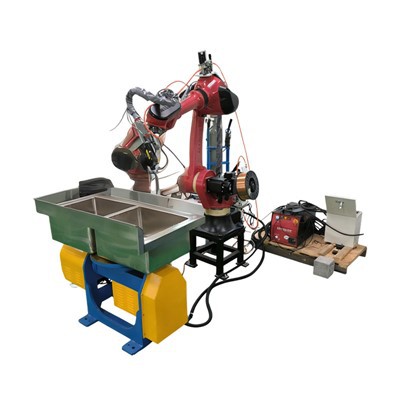
If you’re ready to stop wasting money on inefficient, inconsistent welds and upgrade your business with a heavy-duty welding robot that fits your exact needs, reach out today to schedule a free, no-obligation consultation. We’ll come to your facility, walk your team through your current workflow, help you identify gaps, and recommend a robot that grows with your business. Don’t wait another month to reduce labor costs, meet your delivery deadlines, and take on new orders.
Loading and Unloading Robot References
- American Welding Society. (2022). Heavy-Duty Robotic Welding: Best Practices for Fabrication and Construction. AWS Press.
- Robotic Industries Association. (2023). Guide to Selecting Material Handling and Welding Robots for Industrial Applications. RIA Publications.
- Fabricators & Manufacturers Association International. (2022). ROI Analysis of Robotic Welding Systems for Small to Mid-Sized Heavy Fabrication Businesses. FMA Research Foundation.
- International Journal of Advanced Manufacturing Technology. (2023). Process Compatibility and Performance of Heavy-Duty Robotic Welding Systems for High-Strength Steel Applications. Volume 124, Issue 3, pp. 1021–1035.
Dongguan Chuanglida Intelligent Equipments Co., Ltd.
Address: Room 201, Building 2, No. 61, Shachang 1st Road, Dalang Town, Dongguan City, Guangdong Province
E-mail: haoguangli001@outlook.com
WebSite: https://www.boruntestech.com/
