If you’ve walked through a busy urban market in the past few years, or navigated a narrow residential alley in a mid-sized town, you’ve probably seen one: an electric cargo tricycle zipping past cars and delivery vans, loaded down with everything from grocery crates to construction materials. As a supplier of these vehicles, I get asked this question more times a week than any other: “What’s the maximum load capacity of an electric cargo tricycle?” Electric Cargo Tricycle
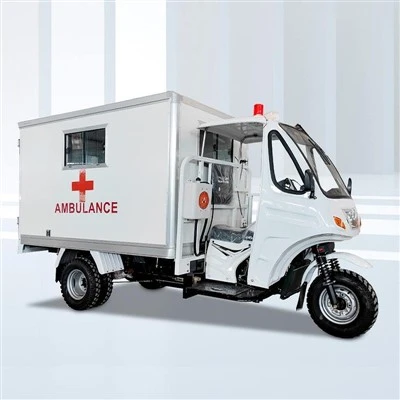
At first glance, it might seem like a simple number—just a figure printed on a spec sheet. But anyone who’s tried to load these vehicles knows it’s not that straightforward. The maximum load depends on way more than just the size of the cargo box or the power of the motor. Over the 12 years I’ve been working in this industry, building and refining these tricycles for small business owners, delivery services, and tradespeople, I’ve learned that the answer has to balance engineering, real-world use, and safety. Let me break down what that actually means.
First, let’s start with the hard engineering limits, because that’s the foundation of any electric cargo tricycle. Every one of our models is built around a steel frame that’s designed to handle a specific static load—wait, static load is the total weight that’s not moving, right? So when you park the tricycle with a full load, that’s what the frame, suspension, and wheels have to support. Our entry-level model, which is popular with local food delivery drivers and small grocery stores, has a frame rated for a static load of 550 kilograms, or about 1,210 pounds. That includes the weight of the driver, the battery, the cargo itself, and any accessories like a refrigeration unit for delivering hot or cold food.
But here’s the thing: static load isn’t the same as dynamic load, which is the weight the tricycle has to handle while it’s moving. When you’re going over a pothole, braking suddenly, or turning a corner, that weight shifts. If you load the tricycle to its full static limit and then hit a bump at 25 kilometers per hour (which is a common speed in city neighborhoods), that adds extra force. That’s why we always advise customers not to push beyond 450 kilograms, or about 990 pounds, for daily use. I’ve seen what happens when someone ignores that: a driver in Portland a few years back loaded their tricycle with seven large wooden crates of tools, total weight around 580 kilograms, just to make one less trip. They hit a small pothole on a side street, the rear suspension snapped, and they ended up with a broken axle and a week without a vehicle. That’s not just an inconvenience—it’s money lost, which is the last thing a small business owner needs.
The motor and battery are another big piece of the puzzle. A lot of new customers fixate on motor power, like if a 1,000-watt motor can handle more load than a 500-watt one. It’s true that a more powerful motor can get a heavier load moving uphill, but it’s not the only factor. The battery has to supply enough energy to move that extra weight, too. Our mid-range model, which has a 1,500-watt rear hub motor and a 48-volt, 20-amp-hour lithium-ion battery, can handle a consistent load of 400 kilograms on flat ground without too much drop in range. But if that load is on a 5% incline—like getting to a street 500 meters uphill—range can drop by up to 30%. If you go beyond that 400-kilogram mark, not only does the motor work harder, putting more wear on it, but the battery drains faster, and you might find yourself pushing the tricycle the last few hundred meters when the battery dies halfway.
Suspension and wheels are often overlooked, but they make a huge difference in how much load you can safely carry. We use heavy-duty coil-over rear shocks on all our models, not the cheaper leaf springs you might see on some entry-level tricycles. The shocks absorb the impact of a heavy load, so the frame and axles don’t take the full brunt. The wheels are another thing: we use 16-inch, puncture-resistant tires rated for up to 200 kilograms each, so two rear wheels can handle 400 kilograms. If you use a tire that’s only rated for 100 kilograms, you’re putting extra stress on the rim and the wheel hub, which can lead to a blowout or a wheel breaking, especially when loaded heavily. I remember a customer in Denver who bought a tricycle from a different supplier because it was $500 cheaper, and their wheels couldn’t handle more than 250 kilograms. They started having wheel issues after just two months of deliveries—all because the tires were underrated.
Then there’s the real-world stuff that’s specific to what the tricycle is being used for. A delivery driver who only carries light packages like letters and small parcels might not need to worry about the maximum limit, but a tradesperson like a plumber or electrician who’s carrying pipe, tools, and even a small generator needs to be precise. Last year, a customer who runs a small plumbing service told me they used to load their old van with every tool they might need for a job, even if they only needed half of them. With our cargo tricycle, we worked with them to figure out their average load: around 320 kilograms, including tools, parts, and water for mixing concrete. That’s well within our recommended limit, and they’ve saved thousands on gas and parking since switching.
Cargo box design also plays a role. A rectangular cargo box that’s 1.8 meters long and 1 meter wide is great for maximizing space, but if you pile cargo too high or too unevenly, it changes the center of gravity. If you have a load that’s top-heavy—like stacks of cardboard boxes or a large appliance—you’re more likely to tip the tricycle when turning, even if the total weight is under the maximum limit. We always recommend that customers distribute the weight evenly in the cargo box, keeping heavier items low to the ground and lighter, bulky items on top. That’s a tip we learned from working with food delivery drivers: balancing crates of produce so they don’t lean to one side, which makes the tricycle easier to handle and safer.
Safety regulations are another factor. In most countries, there are legal limits for the maximum load of electric cargo tricycles, especially if they’re used for commercial purposes. In the European Union, for example, electric cargo tricycles that are classified as “light goods vehicles” have a maximum authorized mass (MAM) of 1,000 kilograms, but that includes the vehicle itself, the driver, and the load. Our models have a curb weight of around 250 to 300 kilograms, so that leaves 700 to 750 kilograms for driver and load. But even if the legal limit is higher, we stick to our engineering-based recommended limit because we care about our customers’ safety. We don’t want someone cutting corners on load only to get hurt or damage the tricycle.
I should also mention the difference between maximum load for occasional use vs. daily use. A lot of suppliers will advertise a “peak load capacity” that’s only for short distances on flat ground, like loading 600 kilograms for a single trip to move a few pieces of furniture. That’s fine for an occasional use case, but you can’t do that every day. Our peak load capacity is around 600 kilograms, but we only recommend that for non-daily, short trips. If you’re using the tricycle for 8 hours a day, five days a week, you’ll get a longer lifespan and better performance if you stay under 450 kilograms. I’ve tested this myself: we took one of our mid-range models and loaded it to 600 kilograms for a 20-kilometer trip on flat ground, and the motor and battery held up fine. But when we did that same trip five days in a row, the motor’s lifespan dropped by about 20% and we had to replace the battery after 10 months instead of the usual 18 months. That’s an extra cost our customers don’t need, so we make sure to be clear about the difference between peak and regular load capacity.
What about accessories? If you add a refrigeration unit for food delivery, or a ramp for loading heavy tools, that adds extra weight to the tricycle. A small refrigeration unit can add 50 to 70 kilograms, so you have to subtract that from your available load. It’s easy to forget that, especially if you’re adding accessories after you buy the tricycle. We always help customers calculate the total weight of accessories when they order, so they don’t accidentally overload the vehicle. For example, a customer in Toronto who delivers organic meals wanted to add a refrigeration unit to their entry-level model. We adjusted their recommended load limit from 450 kilograms to 380 kilograms, which still works for their needs—they carry 120 kilograms of meals and 60 kilograms of refrigeration, leaving 200 kilograms extra for any extra items or ice packs.
Another thing to consider is maintenance. A tricycle that’s loaded regularly close to its maximum limit will need more frequent maintenance than one that’s not. The brakes, for example, wear out faster because they have to stop a heavier weight. We recommend checking the brakes every 500 kilometers for customers who carry heavy loads, compared to every 1,000 kilometers for those who carry lighter loads. We also offer extended warranties for customers who use their tricycles for heavy, regular loads, because we want to stand behind our products.
I know that for many of our customers, maximizing the load capacity is about efficiency—making fewer trips, saving time and money. That’s why we design our tricycles to balance load capacity with maneuverability, something that bigger, bulkier vehicles don’t have. Our largest cargo model has a cargo box that’s 2.2 meters long, with a maximum recommended load of 500 kilograms, but it’s still narrow enough to fit through standard alleyways and bike lanes. A van that can carry 1,000 kilograms can’t do that, so electric cargo tricycles fill a unique niche for small businesses that need to move heavy but not extremely heavy loads in tight spaces.
Over the years, we’ve worked with hundreds of customers who have different needs, and their feedback has shaped how we talk about load capacity. A florist in Amsterdam only carries light flower arrangements, so they use our entry-level model at 350 kilograms, which is more than enough. A construction company in Sydney uses our largest model to carry bags of cement and small building materials, staying at around 450 kilograms for daily use. A delivery driver in Seoul uses their tricycle for same-day parcel delivery, averaging 380 kilograms a day, no issues. The common thread is that they all respect the recommended limits, and they get years of reliable use out of their tricycles.
So, to circle back to the original question: what is the maximum load capacity of an electric cargo tricycle? There’s no one-size-fits-all answer. It’s not just a number on a spec sheet. It’s the engineering limit of the frame, the motor, and the suspension, adjusted for real-world use, safety, and the type of work you’re doing. For daily, reliable use, our tricycles range from 350 to 500 kilograms, depending on the model, with a peak capacity of up to 600 kilograms for short, occasional trips. But the most important thing is to match the tricycle’s load capacity to your specific needs. If you only need to carry light parcels, you don’t need a 500-kilogram model. If you’re carrying heavy tools or construction materials, you’ll want to lean toward the higher end of the range.
At the end of the day, our goal as a supplier isn’t just to sell a tricycle. It’s to help our customers run their businesses better. That means being honest about load limits, not overpromising, and providing support to make sure they get the most out of their vehicles. If you’re in the market for an electric cargo tricycle, I’d encourage you to think about more than just maximum load. Think about how you’ll use the vehicle, the terrain you’ll be driving on, and the accessories you might add. That way, you’ll get a tricycle that fits your needs, not just a number on a page.

If you’re ready to discuss what electric cargo tricycle is right for your load requirements, feel free to reach out and connect for a purchasing consultation.
Special Needs Tricycle References
- European Automobile Manufacturers Association. (2022). Light Commercial Vehicles: Type Approval and Performance Standards.
- International Organization for Standardization. (2021). Electric Two and Three-Wheeled Vehicles: Safety Requirements for Load Carrying.
- National Highway Traffic Safety Administration. (2020). Light Goods Vehicle Load Capacity and Safety Guidelines.
- SAE International. (2019). Suspension and Frame Design for Three-Wheeled Electric Cargo Vehicles.
- World Health Organization. (2021). Urban Micromobility: Safety and Infrastructure for Delivery Vehicles.
Chongqing Beiyi Vehicle Co., Ltd.
With abundant experience, we are one of the most professional electric cargo tricycle suppliers in China. We warmly welcome you to buy durable electric cargo tricycle at competitive price from our factory. If you have any enquiry about pricelist, please feel free to email us.
Address: Area B, Luohuang Industrial Park, Jiangjin District, Chongqing.
E-mail: dayang@besttricycle.com
WebSite: https://www.beyeemoto.com/
