If you’ve ever walked a modern machine shop—whether it’s a small job shop cranking out custom aerospace brackets or a large automotive facility prototyping next-gen engine parts—you’ve probably seen CNC mills carving metal to tight tolerances and 3D printers spitting out plastic prototypes layer by layer. For years, these two technologies operated in separate corners: CNC (Computer Numerical Control) as the workhorse for finished, high-precision parts, 3D printing (aka additive manufacturing) as the go-to for fast, low-cost prototypes or complex geometries CNC couldn’t touch easily. But over the last five years, I’ve watched a shift that’s turned that division on its head, and as a CNC machine tools supplier with over 12 years in the game, I’m here to tell you: yes, CNC machine tools absolutely can—and should—be used in combination with 3D printing. This isn’t just a trendy “tech mashup” for hobbyists; it’s a game-changer for part quality, cost, and production speed, and I’ve seen it play out with my own customers every single month. CNC Machine Tools

Let’s start with why people used to keep these two technologies apart. Traditional wisdom said 3D printing was best for quick, simple prototypes before committing to CNC machining, which was reserved for final production parts that needed smooth surfaces, tight dimensional accuracy, and strength. If you tried to 3D print a part and then machine it, you were wasting time and money, right? Well, that’s only true if you’re using 3D printing for the entire part. Where the magic happens is when you combine them for hybrid workflows, and two of the most common (and practical) combinations have become staples in high-tech manufacturing: hybrid additive-subtractive machines, and secondary post-processing of 3D printed parts with CNC tools. I’ve sold both types of setups to customers across industries, so I can speak from real-world use cases, not just textbook theory.
Take hybrid additive-subtractive machines first. These are single units that have both a 3D printing nozzle (for metal or plastic) and a CNC milling spindle all in one. Let’s say a customer comes to me needing a complex titanium bracket for a drone. Titanium is strong, lightweight, perfect for aerospace, but it’s a nightmare to machine with a traditional CNC—it’s abrasive, wears down tools fast, and removing excess material takes forever. With a hybrid machine, the 3D printing side can deposit only the exact amount of titanium needed to make the bracket, no excess stock. Then, before the print even cools completely, the CNC milling step cuts the bracket’s critical features—like the mounting holes or the smooth surfaces that mate with other drone parts. A customer in the defense sector used this setup with one of our 5-axis CNC machines last year, and they cut their production time for those brackets by 40% while reducing material waste by 60%. That’s huge for titanium, which costs $30 to $50 per pound, no exaggeration. No more buying 50 pounds of titanium billet just to machine a 2-pound bracket. No more wasting time on CNC operations that remove half the material because you started with a big block. That’s the kind of savings that makes shop owners call me back for more equipment.
Now, the second, more accessible combination: using standard CNC machine tools to post-process 3D printed parts. This is the one that’s caught on most quickly among small to mid-sized manufacturers, because you don’t need to buy a brand-new $500,000 hybrid machine. You just take the 3D printed part (which is already close to its final shape) and run it through your existing CNC tools to fix the areas where 3D printing falls short. Here’s where most people miss the mark: 3D printed parts, especially metal ones, have rough, uneven surfaces from the layer lines. Those lines might be fine for a prototype, but if you’re putting that part in a medical device or an engine, it can cause friction, wear, or even failure. CNC milling and turning can smooth those surfaces to Ra values of 0.8 or lower—something most consumer-grade 3D printers can’t touch. I had a customer in the medical device space who was 3D printing custom titanium hip stems; the 3D print gave them the exact porous structure that bone grows into (a big plus for patient recovery), but the outer surface was too rough to meet FDA requirements. We set them up with a 3-axis CNC lathe and a custom tool path to machine only the outer 0.5mm of the stem, turning it from rough layer lines to a smooth, polished surface that passed inspection on the first try. They cut their production time per hip stem from two weeks (3D print plus hand finishing) to three days, and the defect rate dropped to zero. That’s not a hypothetical; that’s a customer I visited last quarter, and I’ve seen dozens more do the same with our CNC equipment.
Wait, but what about the limitations? I don’t want to sugarcoat this, because as a supplier, my job is to give my customers honest, practical advice, not sell them something that doesn’t fit their needs. 3D printing isn’t perfect, and combining it with CNC means you have to plan for the gaps. For example, FDM 3D printed plastic parts are porous, so if you’re using them for a fluid system, CNC milling can seal those pores by machining a thin, solid outer layer. But if you’re 3D printing a part made of a brittle material like PLA, you have to adjust your CNC speeds and feeds—too fast and you’ll chip the soft, unannealed material. Metal 3D printed parts, especially those made with powder bed fusion, have residual stress from the layer-by-layer melting, so you have to bake them in an oven before running them on a CNC, otherwise the part will warp during machining, ruining the entire job. I always walk new customers through these steps when we set up their equipment—no “buy this and it’s perfect” sales pitch, just real talk about what works and what doesn’t.
Another big advantage of combining these two techs is part complexity that neither can do alone. Let’s think about a heat exchanger, a part with tiny, internal channels that transfer heat in everything from EV batteries to industrial air conditioners. Traditional CNC can machine external channels, but getting channels inside a part is almost impossible—you’d have to drill and plug holes, which creates weak points. 3D printing can build those internal channels, but the surface of the channels is too rough for efficient heat transfer, and you can’t get the tight tolerances needed to make the part seal properly. The solution? 3D print the heat exchanger with the internal channels rough, then use a high-precision CNC mill to smooth the channel walls and machine the sealing surfaces on the outside. A customer in the EV industry used this approach with our 5-axis CNC machines last year, and their heat exchangers had 25% better thermal efficiency than parts made with either tech alone, while being 15% lighter. That’s the kind of innovation that comes from combining strengths, not sticking to what a single tech does best.
I should also mention that this combination isn’t just for high-tech industries. I’ve sold small CNC mills to hobbyists and job shops that use 3D printed jigs and fixtures to hold parts during CNC machining. Wait, that’s a reverse of the usual combo, right? Instead of 3D printing the part then machining it, they 3D print a custom jig that holds a weirdly shaped part for the CNC, so they don’t have to spend hundreds of dollars on a custom aluminum jig. A small job shop in Ohio told me last month that they saved $1,200 on a jig for machining custom valve bodies by 3D printing it instead of machining it, and that jig worked perfectly for 100 parts before they needed a new one. That’s a tiny example, but it adds up—job shops that do 50 custom jobs a month can save thousands a year by combining these two simple, accessible steps.
Now, let’s address the elephant in the room: is this more expensive than just using one tech? For some jobs, yes—if you need a small, simple prototype, 3D printing alone is cheaper and faster. But for production runs of 50 to 1,000 parts, combining the two is almost always cheaper in the long run. Let’s do a quick breakdown for a small aluminum bracket: 3D print it (cost: $2 per part, 2 hours each, rough surface), then post-machine it (cost: $1 per part, 30 minutes) for a total of $3 and 2.5 hours per part. Traditional CNC machining from a billet: $5 per part, 3 hours, and it uses 80% more aluminum material than the hybrid approach. For 100 parts, that’s $300 vs. $500, plus $150 in material savings from less scrap. The math is simple. I always show my customers these numbers, not just give them a sales pitch, because if you run a shop, the numbers are everything.
Of course, there are still hurdles to widespread adoption. The biggest one is software. You can’t just take a 3D model, send it to a 3D printer, then send the same file to a CNC mill—you need special software that can nest the additive and subtractive steps, adjust for material shrinkage or warping, and generate tool paths for both processes. That’s one reason I partner with software providers to help my customers set up these hybrid workflows, so they don’t have to spend months learning how to make the two technologies talk to each other. Another hurdle is skill. A CNC operator who’s been in the business for 20 years might not know how to run a 3D printer, and a 3D printing specialist might not understand CNC tolerances. But that’s changing—trade schools are starting to add hybrid manufacturing courses, and most of my current customers are training their existing operators, not hiring new people, because the skills are complementary, not opposite.
Over the last year, I’ve seen more and more shops come to me asking not just for a CNC machine, but for advice on how to integrate it with their 3D printers. Last month, a customer from a medical device startup brought me a prototype they made: a 3D printed plastic housing for a glucose monitor, which was cheap and fast to make, but the screw holes were too rough to thread and the outer edges had small layer gaps that wouldn’t pass sterilization. We set them up with a small desktop CNC mill (perfect for small, delicate parts) and a custom tool path to machine only the critical features, and they had a production-ready part in two days, not two weeks. That’s the kind of problem-solving I live for, because it’s not just selling a machine—it’s helping a customer do something better than they could on their own.
So, to circle back to the original question: Can CNC machine tools be used in combination with 3D printing? The answer is a resounding yes, but not just in the way you might think. It’s not just a toy for tinkerers or a trend for tech bros. It’s a practical, cost-effective way to solve real manufacturing problems, whether that’s cutting material waste, improving part quality, reducing production time, or making complex parts that neither tech could make alone. As a CNC machine tools supplier, I’ve seen this combination work for small job shops and large aerospace firms alike, and I don’t see it going away anytime soon—in fact, I expect it to become the standard for manufacturing in the next five years.
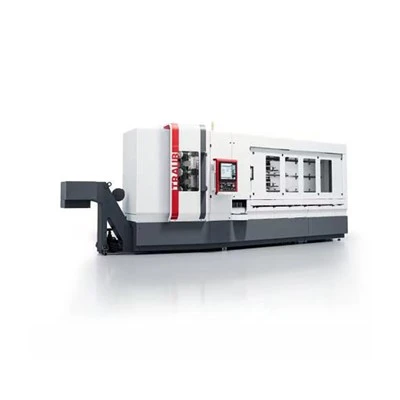
If you’re a shop owner, engineer, or product designer who’s curious about how combining CNC and 3D printing could help your business—whether you’re prototyping new products, fixing quality issues, or cutting production costs—reach out to us. We don’t just sell machines; we work with you to build a workflow that fits your specific needs, no one-size-fits-all solutions. Don’t waste time guessing if this works for you; let’s talk about your next project.
CNC Machine Tools References
- ASTM International. (2022). Standard Guide for Hybrid Additive and Subtractive Manufacturing of Metallic Parts. ASTM F3301-22.
- International Data Corporation (IDC). (2023). Global Hybrid Manufacturing Equipment Market Forecast, 2023-2027. IDC Manufacturing Insights.
- American Society of Mechanical Engineers (ASME). (2021). Journal of Manufacturing Science and Engineering: Hybrid Additive-Subtractive Processing for Complex Aerospace Components. Vol. 143, No. 10.
- National Institute of Standards and Technology (NIST). (2022). Post-Processing of Additively Manufactured Medical Devices Using CNC Machining. NIST Technical Note 2098.
Yuhuan County ZheXuan Machinery Factory
As one of the most professional CNC machine tools manufacturers and suppliers in China, we’re featured by high quality customized products. Please rest assured to wholesale bulk CNC machine tools in stock here from our factory. Also, quotation is available.
Address: Xiafan Village, Qinggang Town, Yuhuan City
E-mail: zxjc1313@126.com
WebSite: https://www.zxmachinetool.com/
