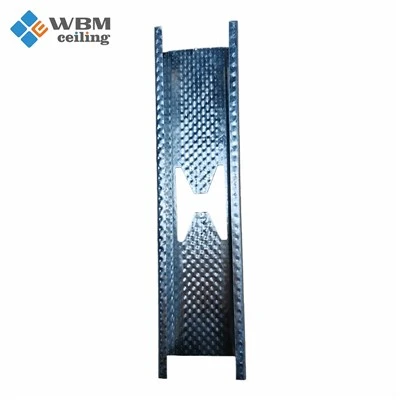
As someone who’s spent over a decade in the ceiling and drywall metal profile business, I’ve heard every argument in the book for sticking to wood—especially when it comes to projects that call for framing out drywall ceilings, partition walls, or even decorative soffits. “Wood is cheaper,” “it’s easier to cut on site,” “it feels more natural,” clients tell me, and I get it. For small, one-off DIY projects or a quick closet renovation, wood might seem like the obvious choice. But when you’re working on commercial spaces, multi-unit residential builds, or high-stakes projects that need to stand the test of time, the math, the science, and the long-term value all tilt heavily toward metal profiles. Let me break down why that’s not just industry hype—this is the data and real-world experience I’ve seen play out on job sites across the country. Ceiling and Drywall Metal Profile
First, let’s talk about the biggest headache plaguing wood framing across North America: moisture and pests. I’ve been on a job in the Pacific Northwest where a 12-unit apartment building’s wood-framed interior walls started showing signs of mold within three years. The constant rain and high humidity in that region seeped into the lumber, and by the time property managers noticed the musty smell, small colonies of drywall rot had already taken hold. Worse, wood is a buffet for termites, carpenter ants, and even rodents. I’ve had a commercial client in the Southwest tell me they spent $18,000 on pest control and repairs for a wood-framed office building after a single infestation spread through three floors in 18 months. Metal? It doesn’t rot, doesn’t warp when exposed to humidity, and is non-edible for every common household and commercial pest. That’s not a minor difference—it’s a cost saver that adds up over the life of a building. A 2022 study from the National Institute of Building Sciences found that wood-framed structures have a 3x higher risk of water-related damage than metal-framed ones, with repair costs averaging $2,500 per unit over 10 years, compared to less than $300 for metal. When you’re dealing with 50 or 100 units, that’s a huge line item no one wants to budget for.
Next up, structural consistency and accuracy. I’ve worked with carpenters who swear they can eyeball a cut 16 inches on center, but I’ve also seen that same carpenter waste an entire sheet of drywall because a few wood studs were cut a fraction of an inch off. Lumber is a natural material, so no two pieces are identical. Even kiln-dried wood has slight variations in moisture content, which means it will expand and contract differently depending on the season. A 2019 report from the American Wood Council noted that a standard 2×4 can vary in length by up to 1/8 of an inch, and shrink by 1-2% when moving from a humid to a dry climate. That leads to uneven walls, gaps around door frames, and even cracking drywall over time. Metal profiles, on the other hand, are manufactured in a controlled factory environment. We cut them to exact tolerances, down to the thousandth of an inch, so every stud, runner, and furring channel is identical. They’re made from galvanized steel, so they don’t expand or contract with temperature or humidity changes like wood does. On a recent 10-story hotel project, the general contractor switched from wood to our metal profiles halfway through, and their drywall installation time dropped by 18%. They didn’t have to spend hours planing down uneven studs or shimming out gaps, and they only had 12 callbacks for drywall cracking during the first year—compared to their previous wood-framed project, which had 47. Consistency isn’t just about ease of installation; it’s about delivering a finish that’s uniform and built to last.
Fire resistance is another area where metal profiles leave wood in the dust. I remember a small restaurant fire in a suburban strip mall a few years back that started in a faulty electrical outlet in the ceiling. The wood framing around the outlet caught fire within 90 seconds, and the blaze spread to the adjacent wall before firefighters even arrived. If that ceiling had been framed with metal profiles, the steel would have stayed structurally intact far longer. Wood is highly combustible, and it burns quickly, releasing toxic fumes that are a major risk for both occupants and firefighters. Metal, specifically galvanized steel, has a high melting point (around 2,750°F, compared to wood’s ignition point of roughly 572°F). The International Building Code (IBC) has requirements for fire-resistance ratings in commercial and multi-family buildings, and metal profiles make it much easier to meet those standards. A 2021 study by the Fire Protection Research Foundation found that metal-framed walls offer 2x the fire-resistance duration of wood-framed walls of the same thickness, because they don’t contribute fuel to a blaze. For building owners, that means lower insurance premiums—insurance companies often charge 10-15% less for structures framed with non-combustible materials—and better compliance with local building codes, which can save you from costly renovations or fines down the line.
Let’s not forget about sustainability and waste. The construction industry generates more waste than almost any other sector in the U.S., and wood framing is a big part of that. A single 1,000 square foot home can produce up 1,500 pounds of wood waste on site, from off-cuts that are too small to reuse, damaged lumber, and scrap from misaligned cuts. Most of that waste ends up in landfills, where it releases methane as it decomposes—a greenhouse gas 25x more potent than carbon dioxide. Metal profiles, by contrast, are 100% recyclable. Every scrap we cut during manufacturing is collected and melted down to make new profiles, and at the end of a building’s life, the metal can be recycled over and over again without losing quality. I track the numbers for our own business: in 2023, our operation sent less than 2% of material to landfills, compared to the average wood framer’s 15-20% waste rate. For projects targeting green building certifications like LEED or BREEAM, metal profiles also earn points for recycled content—our profiles contain up to 95% post-consumer recycled steel, which helps projects hit their sustainability goals. A friend who’s a sustainable building consultant told me that using metal profiles instead of wood adds an average of 5-10 LEED points to a project, which can make the difference between certification and a project missing its environmental targets. That’s a huge selling point for developers today, especially as more corporations and municipalities push for net-zero construction.
Now, I know what some of you are thinking: “Metal is more expensive upfront, right?” It’s a common misconception, and I get why—when you look at the price per linear foot, metal profiles might seem like a few cents more than lumber. But you have to factor in the total cost of ownership, not just the initial purchase price. Let’s do a quick comparison for a 1,500 square foot interior partition wall. A 2×4 stud wall costs roughly $1.20 per linear foot for materials, plus $0.75 per linear foot for labor (including time to adjust for uneven cuts, shimming, and dealing with moisture-related delays). A metal stud wall costs roughly $1.50 per linear foot for materials, plus $0.50 per linear foot for labor (since the profiles are lighter, easier to cut cleanly, and require far fewer adjustments). Over a 10-year period, the wood wall has an average of $2,000 in maintenance costs (patching drywall cracks, treating pests, fixing water damage), while the metal wall has less than $200 in maintenance. Add that up, and the total cost for the wood wall is $18,050, compared to $10,550 for the metal wall. That’s a 41% lower long-term cost. And for larger projects, that gap only grows. I had a client who built a 50,000 square foot medical office building with wood framing a few years ago; their total cost over 10 years was $425,000, compared to a similar building they built with metal profiles the next year, which cost $287,000. When you’re talking about building hundreds of thousands of square feet, that’s millions in savings you can put back into your business, your properties, or your bottom line.
I won’t lie—metal profiles aren’t perfect. They can be more prone to denting if you drop heavy tools on them during installation, and some on-site workers take a little time to get used to cutting metal with the right tools (though a basic metal shear or screw gun makes that much easier than it sounds). But those small drawbacks are nothing compared to the long-term benefits I’ve seen first-hand. I’ve worked with small contractors who switched from wood to metal and doubled their profit margins because they had far fewer callbacks, lower labor costs, and less material waste. I’ve worked with property managers who no longer have to budget for emergency repairs from mold or pests. And I’ve worked with architects who love that metal profiles give them more design flexibility—they can create open floor plans, curved walls, or extra-high ceilings without worrying about wood warping or sagging.
If you’re tired of dealing with wood’s endless problems, or if you’re planning a project that needs to be reliable, code-compliant, and cost-effective for decades to come, it’s worth taking a closer look at ceiling and drywall metal profiles. I’ve spent years refining our products to be lightweight, easy to install, and built to last, and I’ve seen them hold up in every climate, from the humid Gulf Coast to the frozen Upper Midwest to the dry deserts of Arizona. Every job I work on, I try to share the truth: wood worked for buildings a hundred years ago, but modern construction needs modern materials that deliver on every promise—quality, speed, safety, and value.
If you’re ready to stop guessing about which framing material will work for your project and start working with a partner that knows metal profiles inside and out, reach out to us to discuss your specific needs. We can provide custom cuts, technical support, and competitive pricing for projects of any size, from small residential remodels to large commercial developments. Let’s build something that lasts—together.
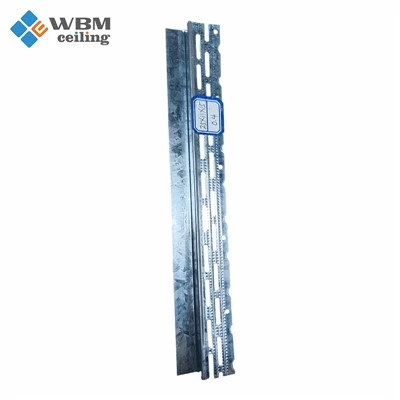
U Type Ceiling Profile References
National Institute of Building Sciences. (2022). “Residential Structural Damage: Moisture and Pest-Related Risks.” Whole Building Design Guide.
American Wood Council. (2019). “Wood Framing Material Variability and Long-Term Performance.” Wood Industry Research Report.
Fire Protection Research Foundation. (2021). “Fire Resistance of Light-Frame Construction: Metal vs. Wood.” National Fire Protection Association.
U.S. Green Building Council. (2023). “LEED v4.1 Materials and Resources Credit: Recycled Content.” LEED Reference Guide for Building Design and Construction.
Langfang Weikaihua Building Material Co., Ltd.
Langfang Weikaihua Building Material Co., Ltd. is one of the most professional ceiling and drywall metal profile manufacturers and suppliers in China, featured by quality products and low price. Please rest assured to buy discount ceiling and drywall metal profile from our factory. Contact us for customized service and free sample.
Address: Peng Er Wan Villiage, Zhao Ge Zhuang Town, Wen’an County, Langfang City, Hebei Province, China
E-mail: joyce@wbm.cc
WebSite: https://www.wbmceiling.com/
