In the realm of precision machining, a vertical surface grinder is an indispensable tool. It is widely used in various industries, from automotive to aerospace, for its ability to deliver high – precision flat and smooth surfaces on a wide range of workpieces. One critical aspect that directly impacts the performance, efficiency, and quality of the grinding process is the feed rate. As a vertical surface grinder supplier, I am often asked, "What is the feed rate of a vertical surface grinder?" In this blog, I will delve into this question in detail, exploring its definition, influencing factors, and how to optimize it. Vertical Surface Grinder
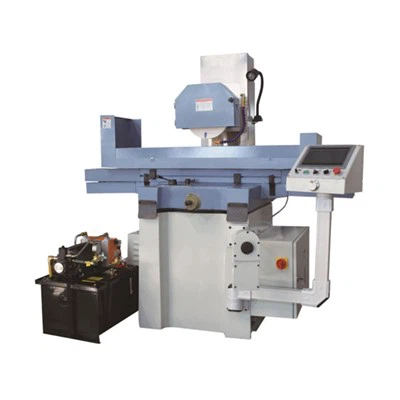
Understanding the Feed Rate of a Vertical Surface Grinder
The feed rate of a vertical surface grinder refers to the speed at which the workpiece moves relative to the grinding wheel during the grinding process. It is typically measured in millimeters per minute (mm/min) or inches per minute (ipm). This rate is vital as it determines not only how quickly the grinding operation can be completed but also the quality of the finished surface.
There are mainly two types of feed rates in a vertical surface grinder: the longitudinal feed rate and the cross – feed rate. The longitudinal feed rate is the speed at which the workpiece moves parallel to the axis of rotation of the grinding wheel. This movement is usually along the length of the grinding table. The cross – feed rate, on the other hand, is the speed at which the workpiece moves perpendicular to the axis of rotation of the grinding wheel, often controlling the depth of cut across the width of the workpiece.
Factors Affecting the Feed Rate
Several factors come into play when determining the appropriate feed rate for a vertical surface grinder.
Workpiece Material
Different materials have varying hardness, toughness, and heat – resistance properties. Harder materials, such as hardened steel or ceramics, are more difficult to grind. A lower feed rate is usually required to prevent excessive wear on the grinding wheel and to avoid damaging the workpiece due to over – heating. Softer materials like aluminum or brass can generally tolerate higher feed rates as they are easier to remove material from. For example, when grinding an aluminum alloy, a feed rate in the range of 10 – 20 m/min might be suitable, while for a hardened tool steel, the feed rate could be as low as 1 – 3 m/min.
Grinding Wheel Characteristics
The type, grain size, grade, and structure of the grinding wheel all influence the feasible feed rate. Coarser – grained wheels can usually handle higher feed rates because they can remove material more aggressively. In contrast, finer – grained wheels are used for finishing operations and require lower feed rates to achieve a smooth surface finish. The grade of the wheel, which indicates its hardness, also matters. A harder – grade wheel can be used with a relatively higher feed rate as it is more resistant to wear, while a softer – grade wheel may need a lower feed rate to prevent premature wear.
Desired Surface Finish
The required surface finish is a crucial consideration. If a very smooth and precise surface finish is needed, such as in the production of precision molds or optical components, a lower feed rate is necessary. This allows the grinding wheel to make more controlled passes over the workpiece, removing a smaller amount of material with each pass and reducing the risk of surface irregularities. On the other hand, if the surface finish requirements are less stringent, a higher feed rate can be employed to increase productivity.
Machine Rigidity and Power
The rigidity of the vertical surface grinder itself plays an important role. A more rigid machine can withstand higher cutting forces associated with higher feed rates without excessive vibration or deflection. Additionally, the power of the machine’s motor is a limiting factor. If the feed rate is set too high, the motor may not have enough power to drive the grinding process smoothly, leading to overloading, reduced grinding quality, and potential damage to the machine.
Optimizing the Feed Rate
Optimizing the feed rate is a balance between productivity and quality. Here are some steps and strategies to achieve this balance.
Initial Testing
Before starting a large – scale grinding operation, it is advisable to conduct a series of test runs on a sample workpiece. Begin with a relatively conservative feed rate based on the material properties and grinding wheel characteristics. Then, gradually increase the feed rate while closely monitoring the grinding process, including the surface finish, the temperature of the workpiece and the grinding wheel, and the power consumption of the machine. Note down the feed rate at which the quality of the surface finish starts to deteriorate or when the machine shows signs of overloading. This will give you a good range of acceptable feed rates for the specific job.
Use of Advanced Control Systems
Many modern vertical surface grinders are equipped with advanced control systems that can optimize the feed rate automatically. These systems use sensors to monitor various parameters such as cutting forces, temperature, and surface quality in real – time. Based on the data collected, the control system can adjust the feed rate to maintain optimal grinding conditions throughout the process. This not only improves the quality of the finished product but also enhances productivity by ensuring that the machine is operating at its most efficient level.
Operator Training
Well – trained operators play a vital role in optimizing the feed rate. They should be familiar with the characteristics of different workpiece materials, grinding wheels, and the capabilities of the vertical surface grinder. Operators should also be able to recognize the signs of improper feed rates, such as excessive noise, vibration, or poor surface finish, and make appropriate adjustments in a timely manner.
The Impact of Feed Rate on Grinding Process Economics
Proper determination and optimization of the feed rate have a significant impact on the economics of the grinding process. A too – low feed rate can lead to low productivity, increased labor costs, and higher machine – hour costs. On the other hand, an excessively high feed rate may result in poor surface quality, increased wheel wear, and potential workpiece rejection, which also adds to the overall cost.
By finding the optimal feed rate, manufacturers can achieve a higher throughput of good – quality workpieces, reduce the cost of consumables (such as grinding wheels), and minimize the need for re – work. This translates into improved profitability and a more competitive edge in the market.
Conclusion

In conclusion, the feed rate of a vertical surface grinder is a critical parameter that influences the grinding process in multiple ways. It is affected by factors such as workpiece material, grinding wheel characteristics, desired surface finish, and machine capabilities. By understanding these factors and implementing strategies for optimization, manufacturers can achieve a balance between productivity and quality.
Wide-Wheel Centerless Grinder As a vertical surface grinder supplier, I am committed to providing our customers with not only high – quality machines but also the knowledge and support needed to operate them effectively. If you are in the market for a vertical surface grinder or need more information on optimizing the feed rate for your specific grinding applications, please feel free to contact us. We are here to assist you in making the right choices for your machining needs.
References
- "Modern Grinding Technology" by Stephen Malkin
- "Manufacturing Engineering and Technology" by Serope Kalpakjian and Steven Schmid
- Technical manuals of various vertical surface grinder models.
Wuxi Mingxu Machinery Equipment Co., Ltd.
As one of the most professional vertical surface grinder manufacturers and suppliers in China, we’re featured by quality products and good price. Please rest assured to buy the best vertical surface grinder for sale here from our factory. Also, custom service is available.
Address: No. 5-5 Jinke Wealth Plaza, Changjiang North Road, Xinwu District, Wuxi City, Jiangsu Province
E-mail: yingyingmxjd@163.com
WebSite: https://www.mingxu-china.com/
